Shipped
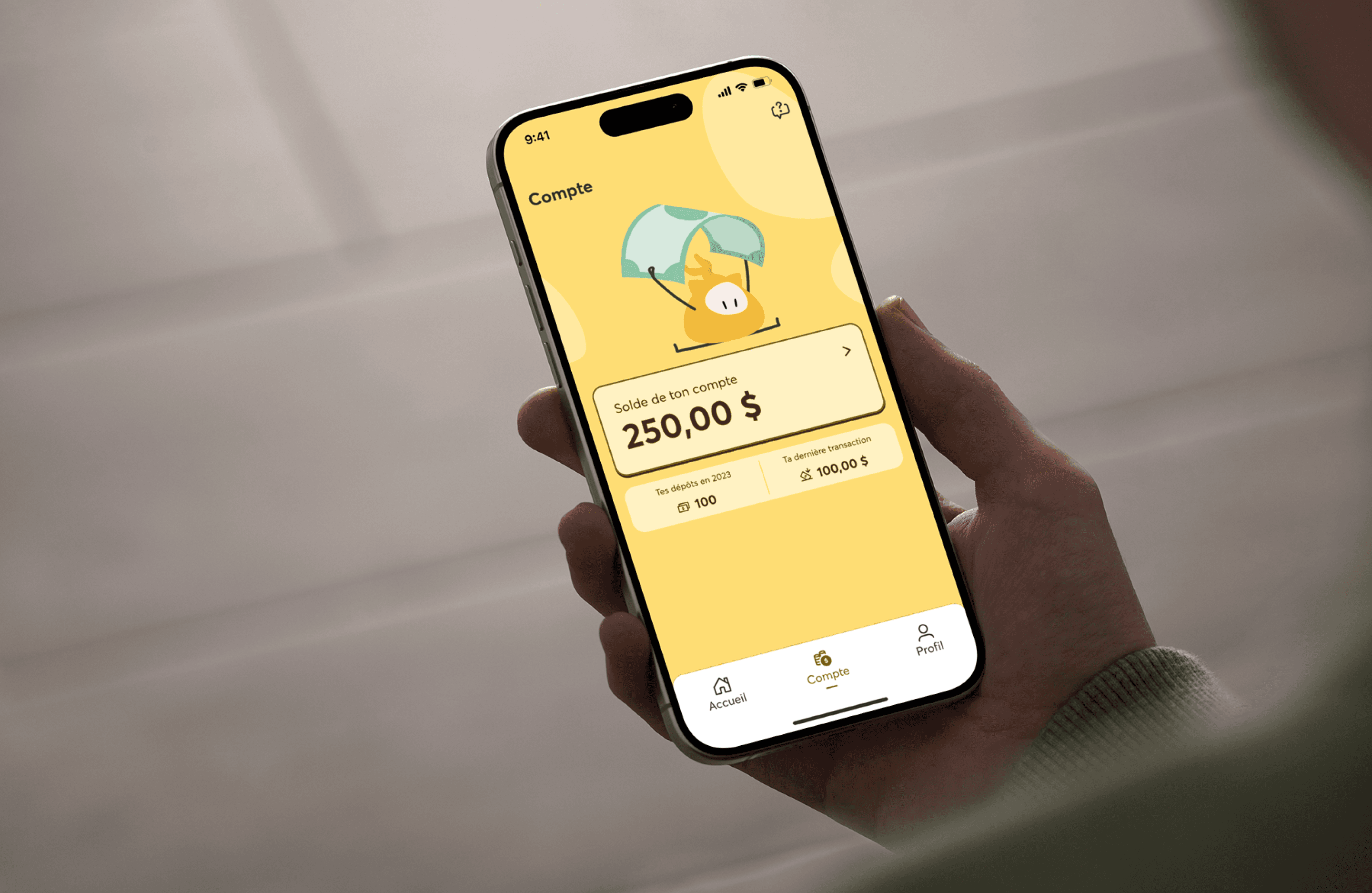
I was the lead UX/UI designer for the School Cash mobile application, a strategic product aimed at introducing young people to financial education through digital means. My key mandate was to define the end-to-end user experience and lead a co-creation process to deliver an interface that was both engaging, accessible, and fun.
The success was immediate and undeniable: the product achieved a high adoption rate with over 30,000 downloads registered within the first four months of its launch.
Timeline
Q2 2023 - Q3 2024
My Role
Product designer
Team
Dominique Vidal, Luisa Vales,Sarah Bernard, Melissa Lord
Awards and Recognition
Winner Octas 2025 — Culture and Society (Large enterprise, Crown corporation, and para-governmental)
Winner Desjardins Pride Award — "Modern" category
Built for simplicity

An immersive experience
in the world of finance
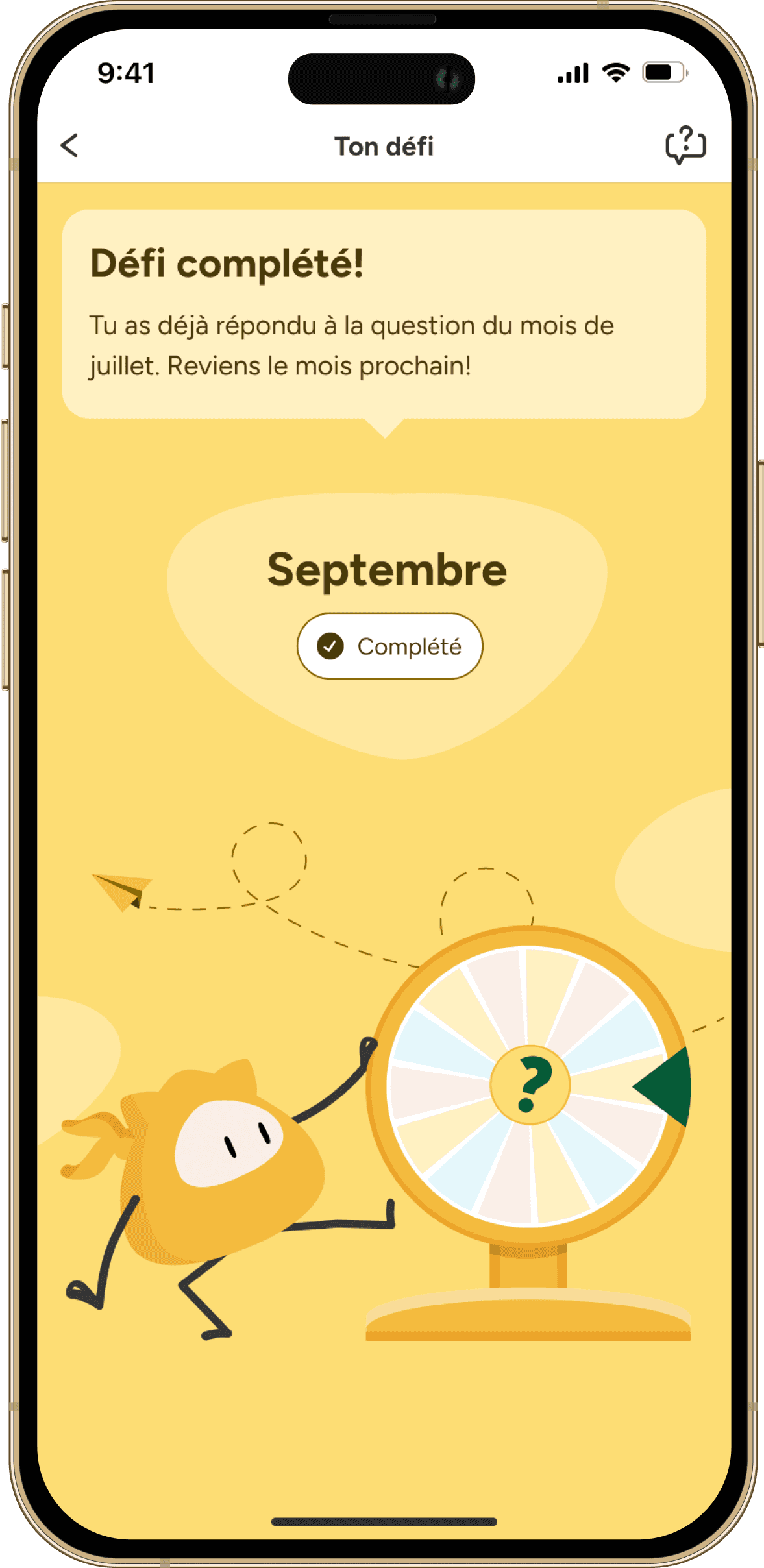
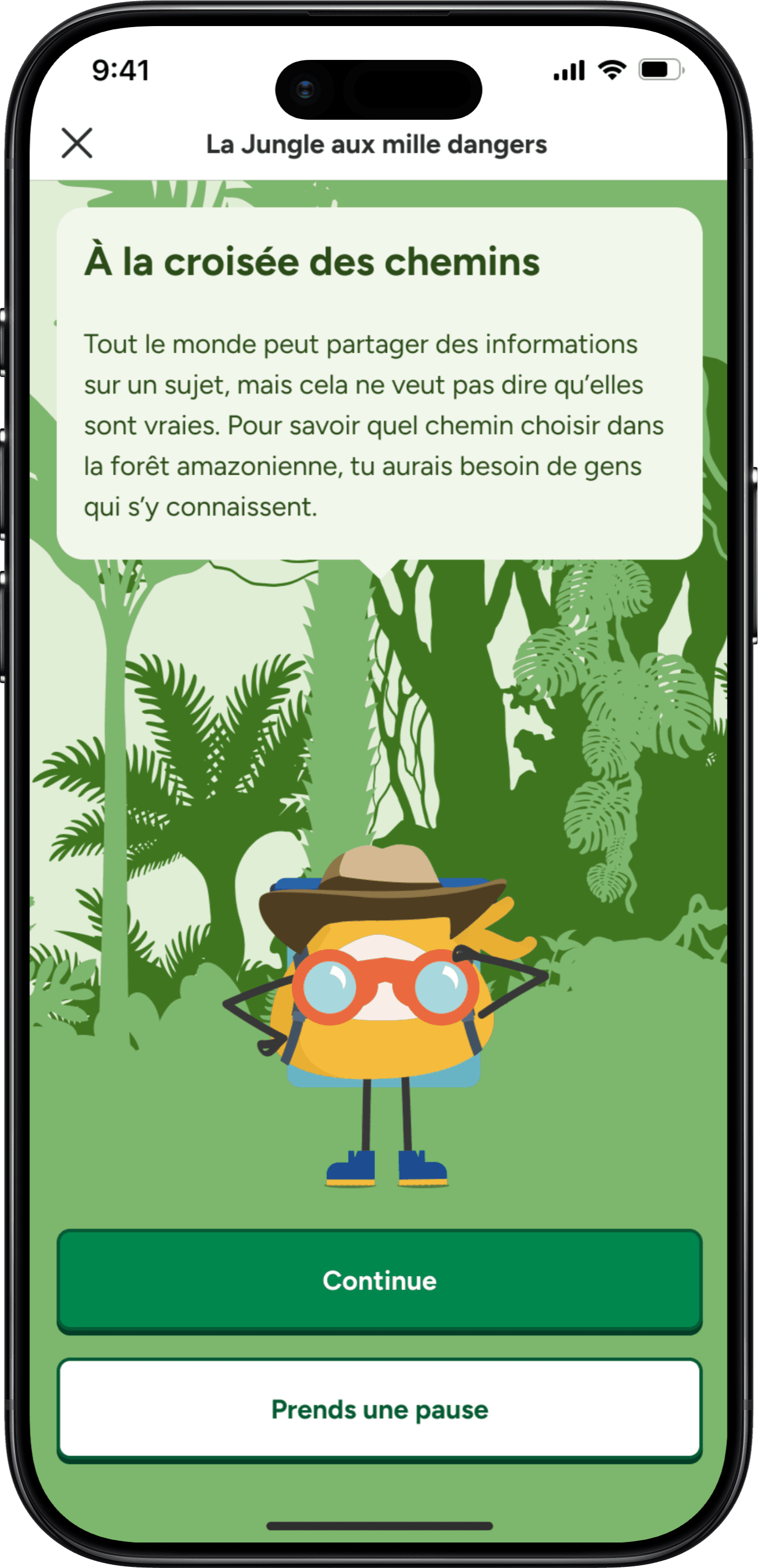
Fun activities and challenges
New Feature
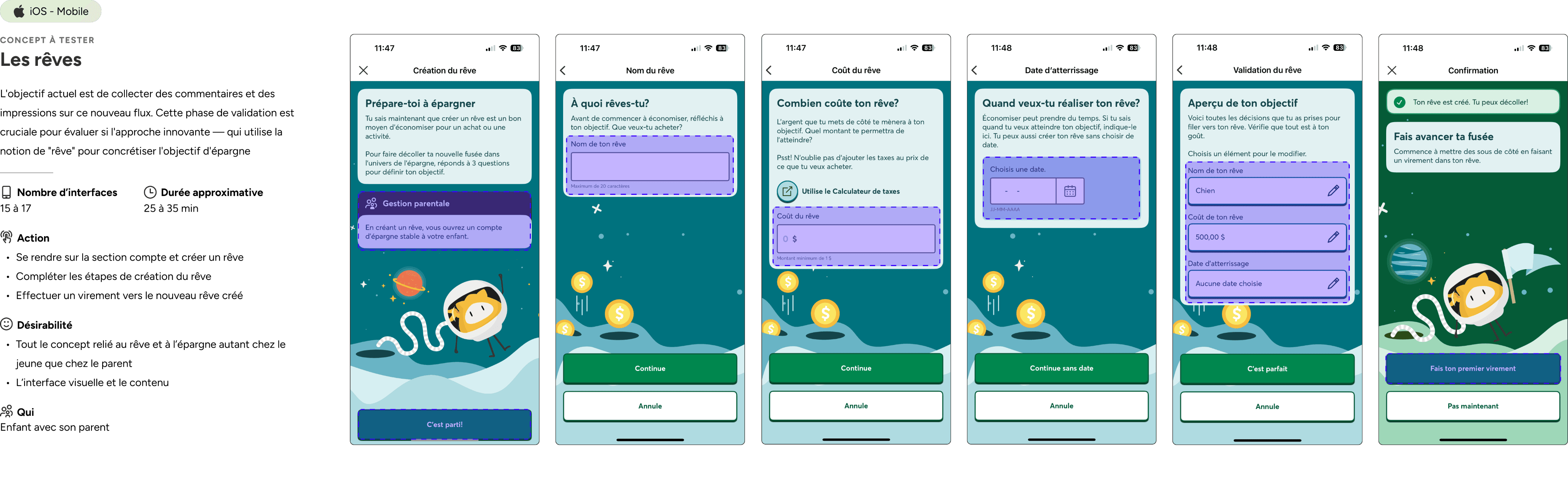
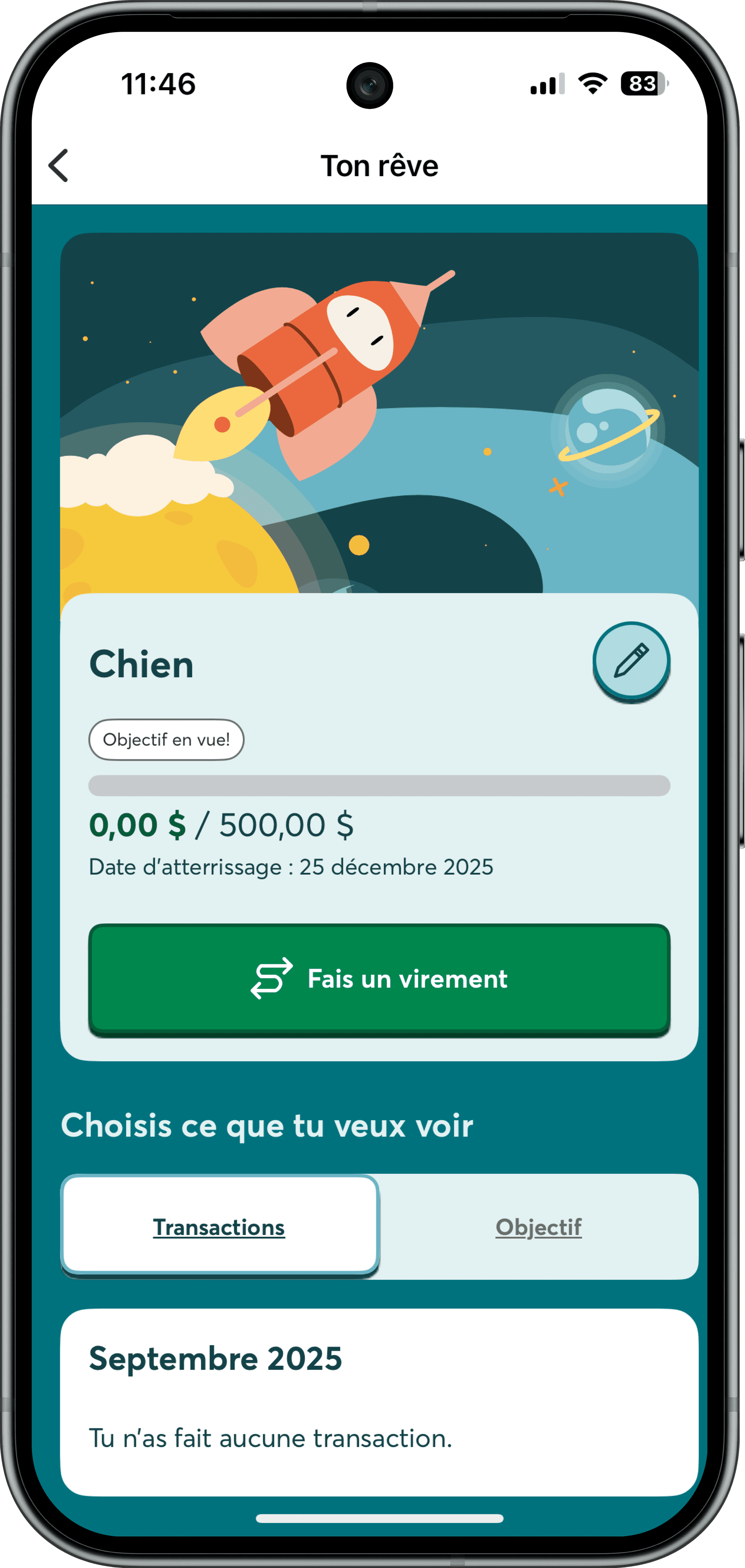
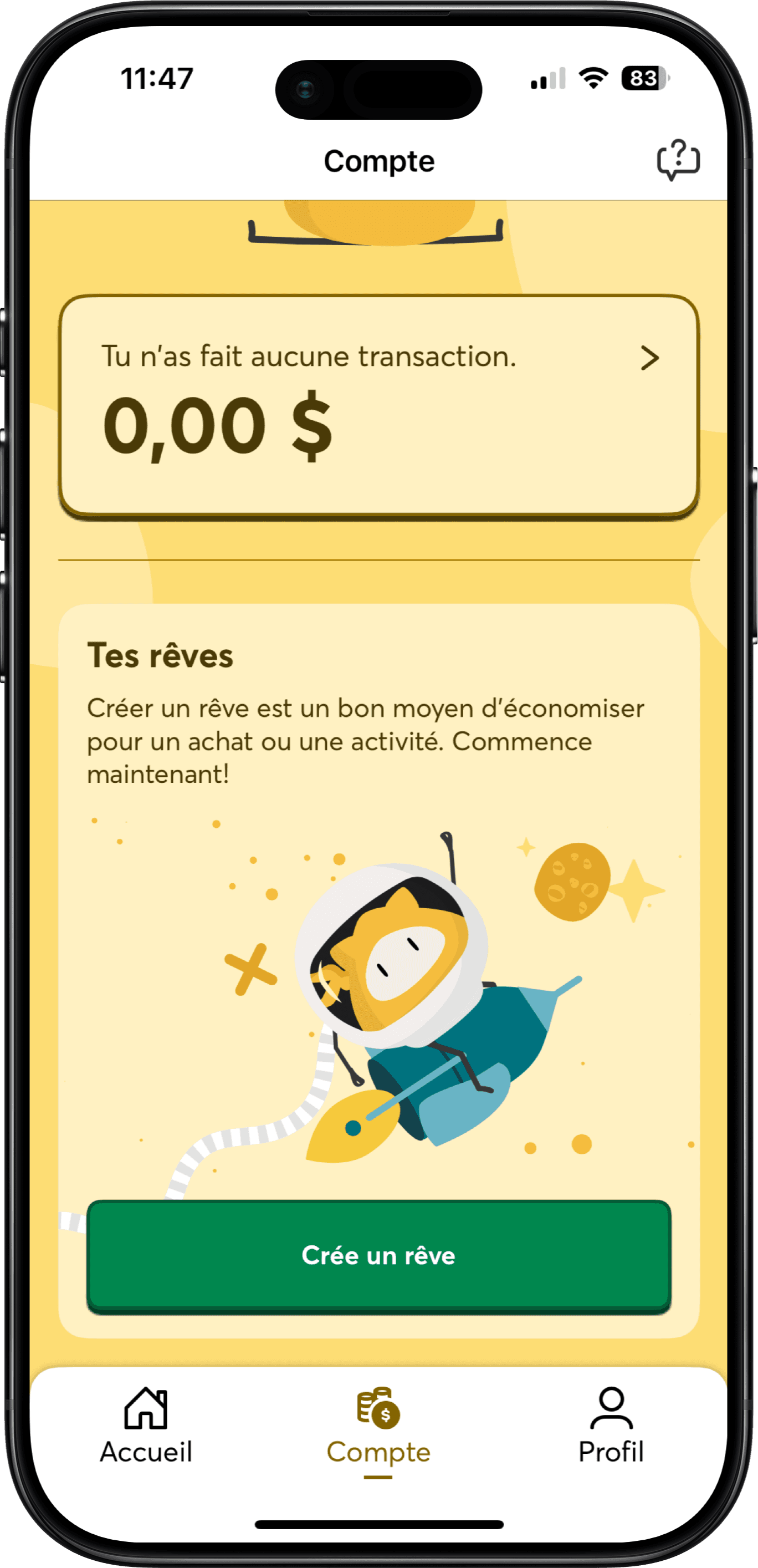
The Dreams
I designed and integrated the "Dreams" feature to enrich the saving experience. The purpose of this solution is to make financial learning more concrete and motivating for young users.
Users can now set a specific savings goal and visualize their progress in real-time. This gamified approach not only instills the fundamentals of saving but, most importantly, transforms an abstract concept into a tangible goal.
Process
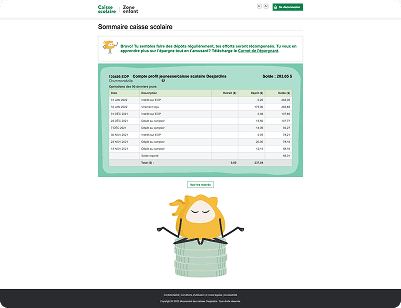
The existing platform showed signs of declining interest:
A significant decrease in the number of active members (dropping from 85,305 to 73,487).
A rise in inactive accounts (from 17,483 to 25,658).
Very low adoption of the authenticated zone (only 4% of users) with an average of only two sessions per year.
However, data showed a marked preference for the mobile channel among our youth clientele (43% for 12–14 year-olds, 84% for 16–17 year-olds). Faced with these indicators, I strongly advocated for the creation of a mobile application, and I established the strategy to position it as the main interaction hub.
Developing Persona Profiles
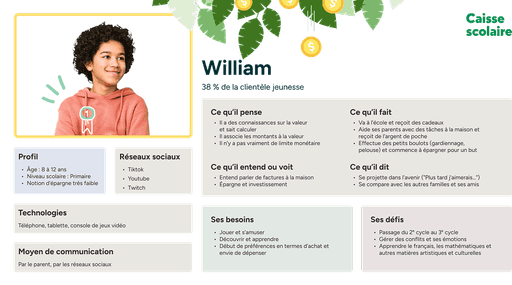
To effectively frame the product scope and optimize development, I participated in a dedicated workshop focused on defining the School Caisse personas.
This research work allowed us to establish two distinct persona types. These profiles guide all our design and feature decisions, ensuring that the application precisely meets the needs of the main users and facilitates development prioritization.

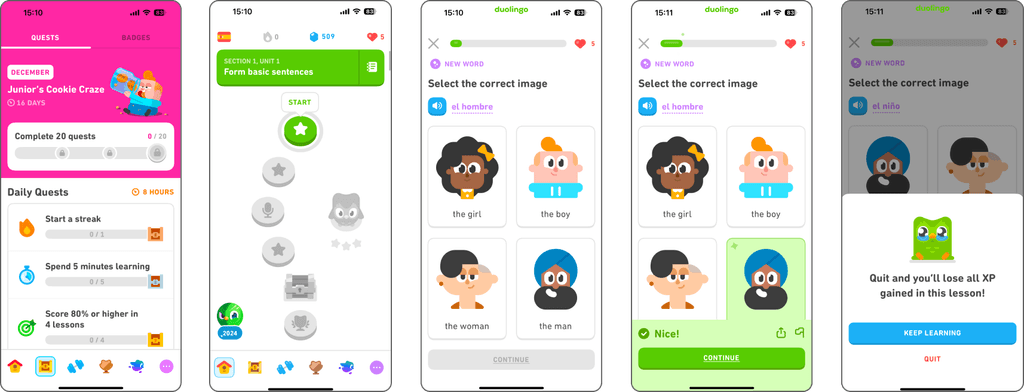
I identified Duolingo as a key reference point. This company's applications were a major source of inspiration, particularly for their mastery of gamification mechanics aimed at making learning both engaging and stimulating.
Overcoming Resistance and Defining Strategy
I initially faced resistance, notably the desire to limit development to a simple "website copy-paste." I proactively demonstrated the added value of native development, emphasizing its full potential for the user experience and its ability to further highlight the product's educational and playful aspects.
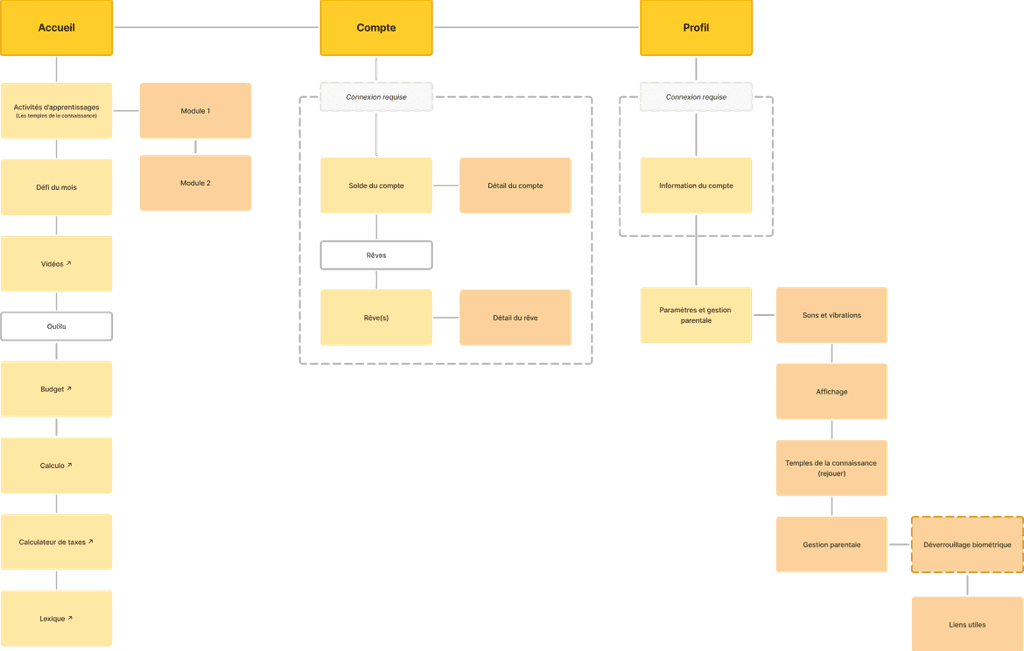
This strategic persuasion led to the adoption of an application architecture designed with three clear sections. This structure met specific business needs, such as the necessity to offer access to educational tools without authentication for non-members, thereby broadening the program's reach.
Design
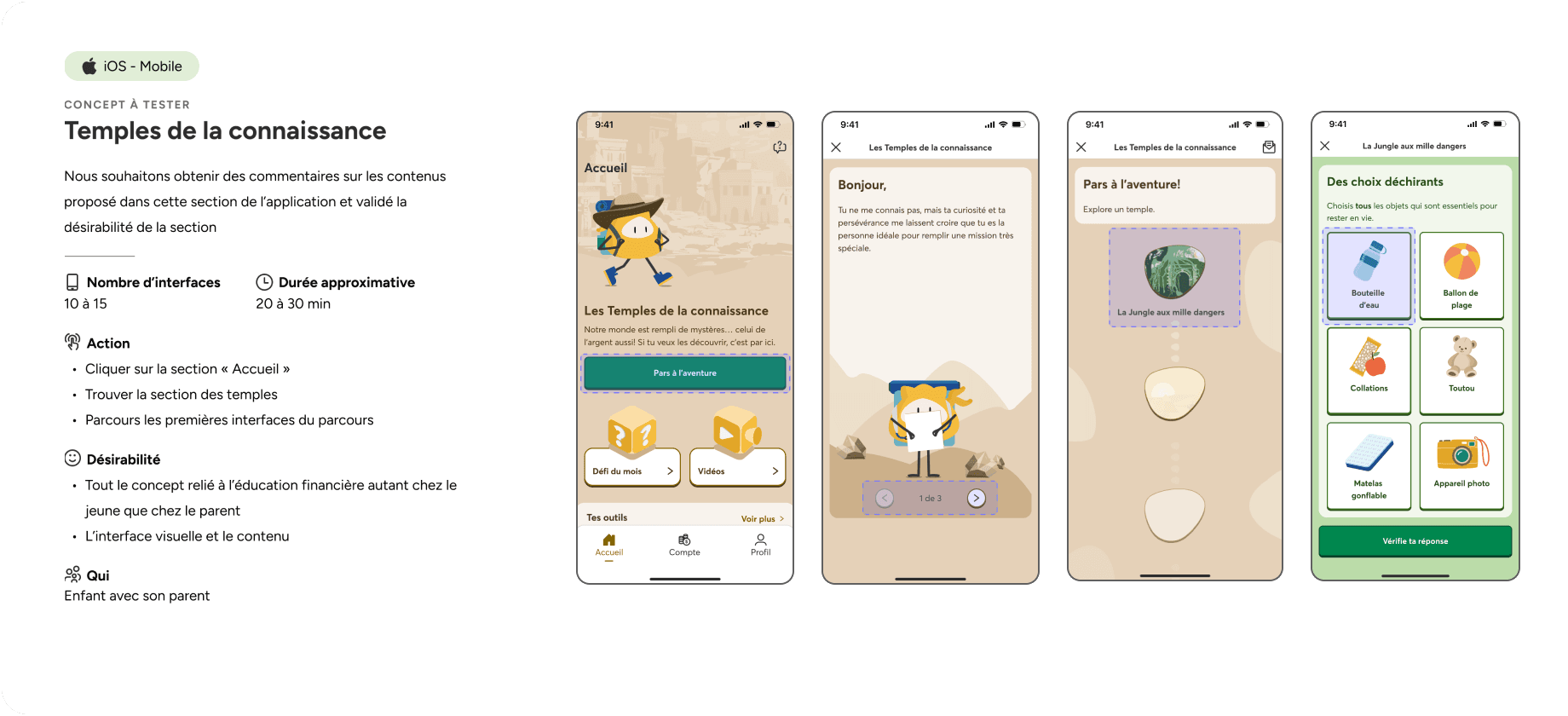
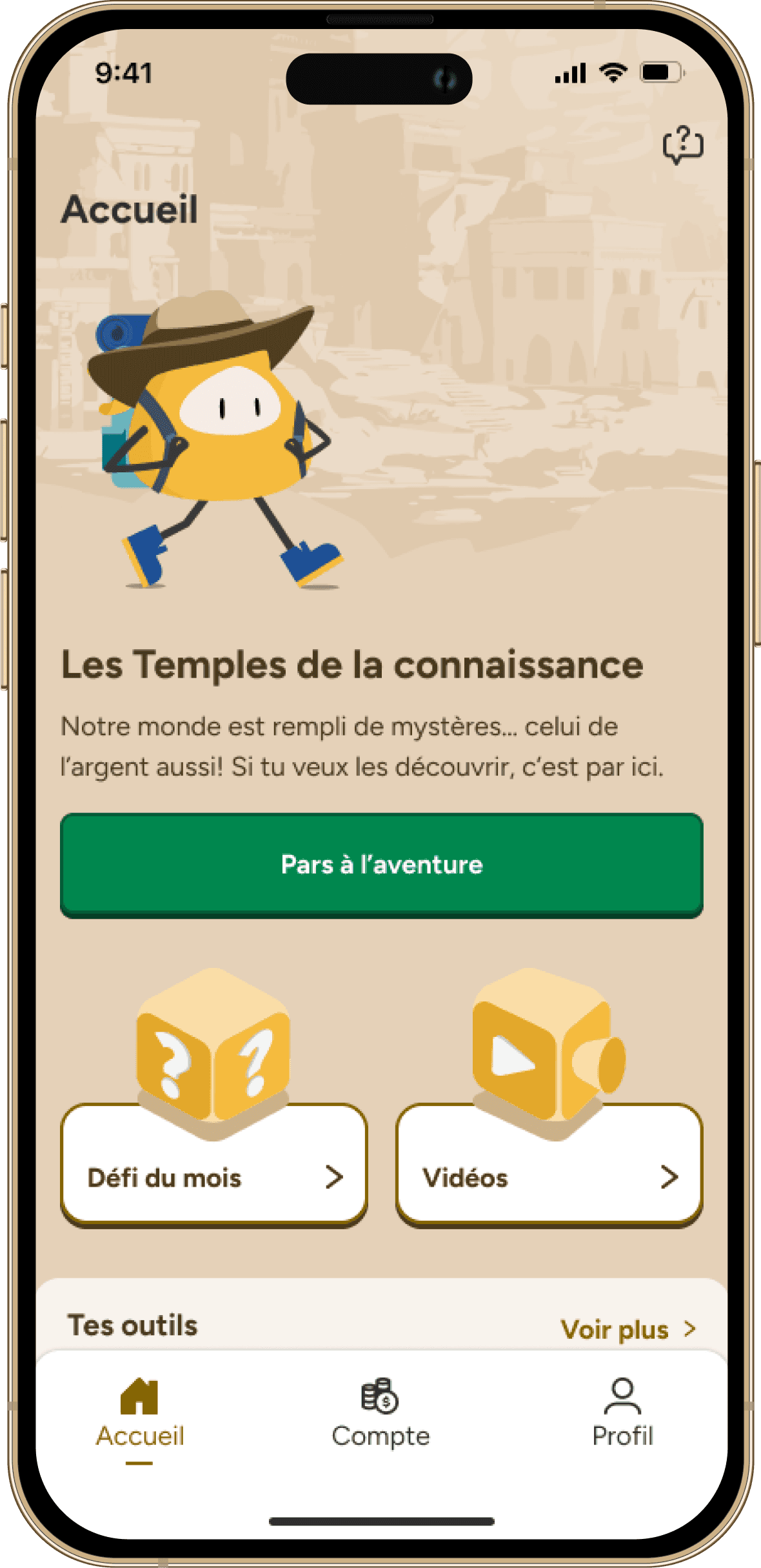
Educational Section
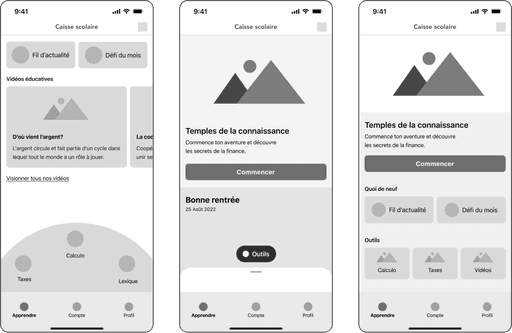
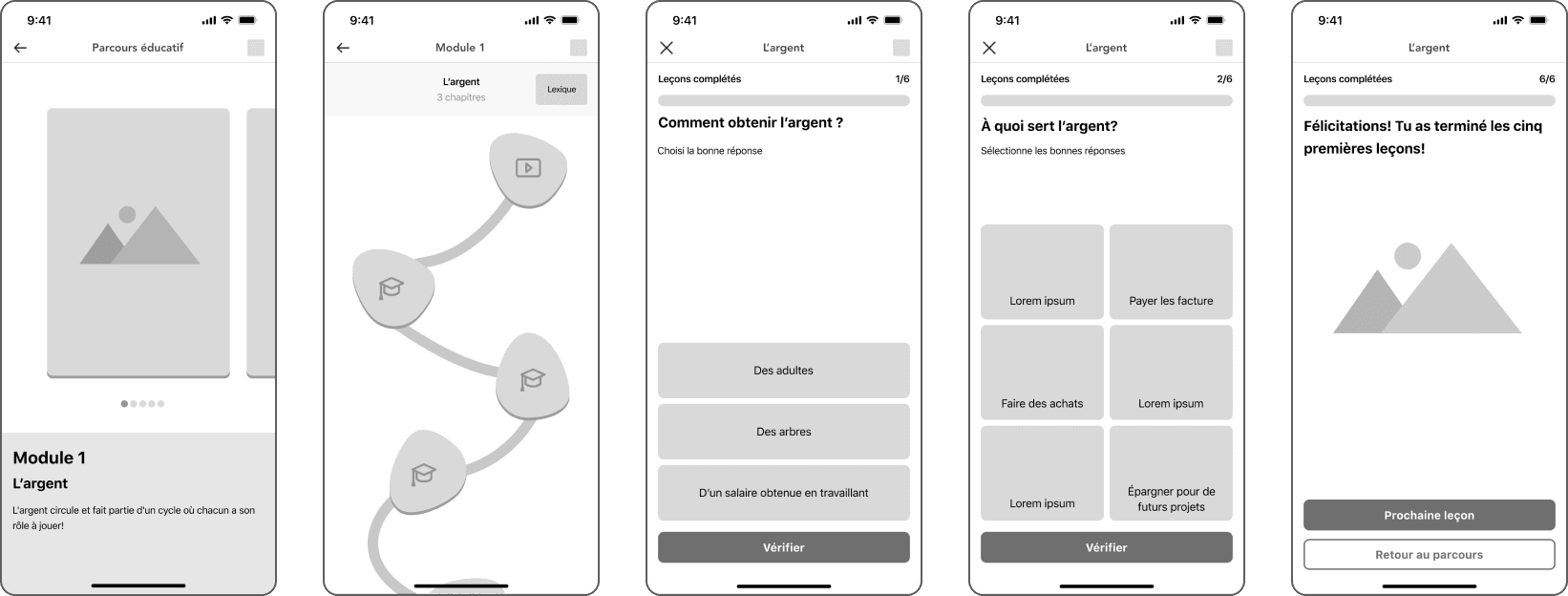
Since the educational aspect is central to the program, the major challenge was the lack of retention generated by the existing tools. I took the initiative to convince the business team to develop a Proof of Concept (POC). The goal was to envision an incentive feature that would encourage regular use of the application by young people.
This is how "The Temples of Knowledge" was born: a series of gamified educational activities that I designed to engagingly explore the various aspects of financial literacy, thus transforming learning into a retention experience.
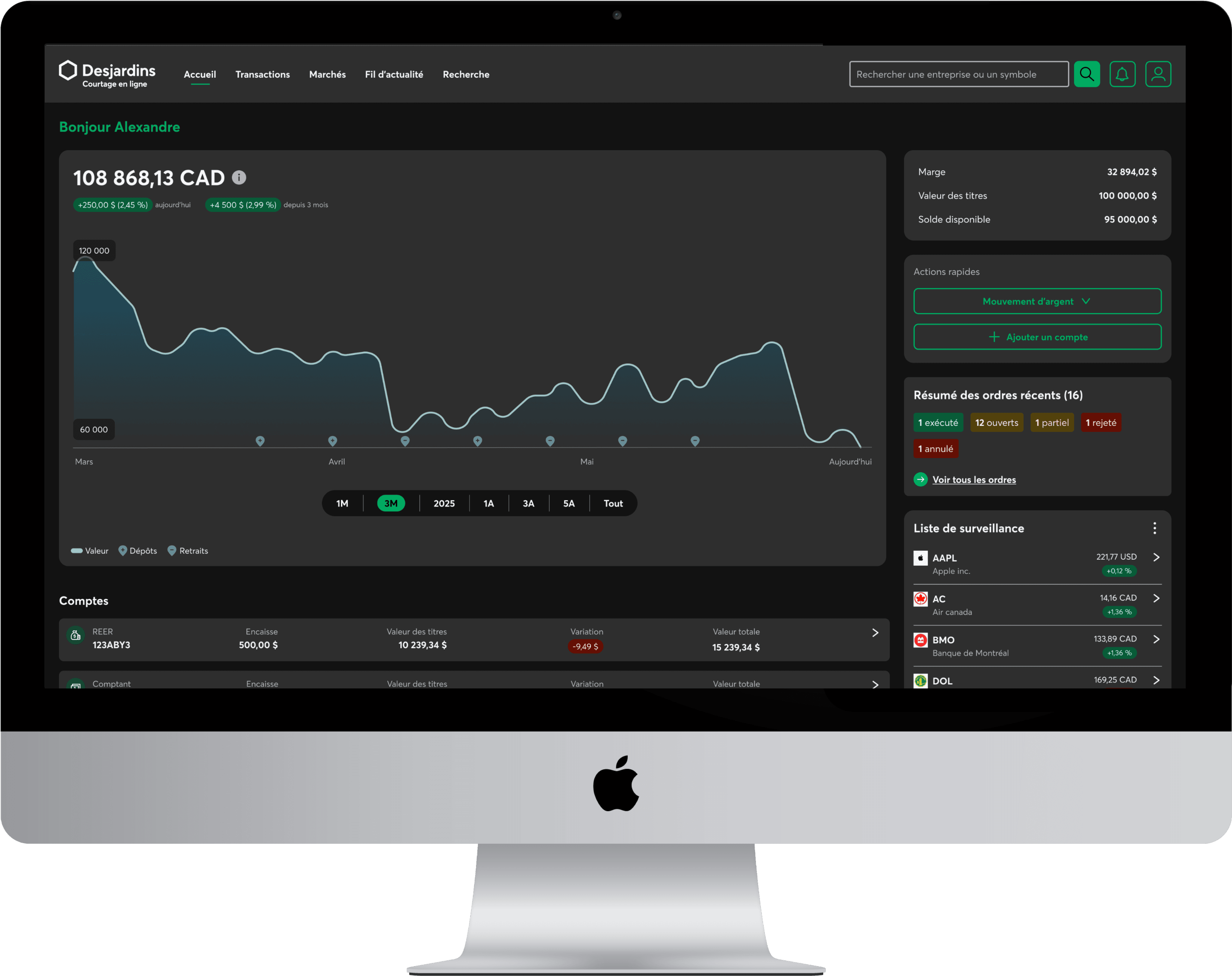
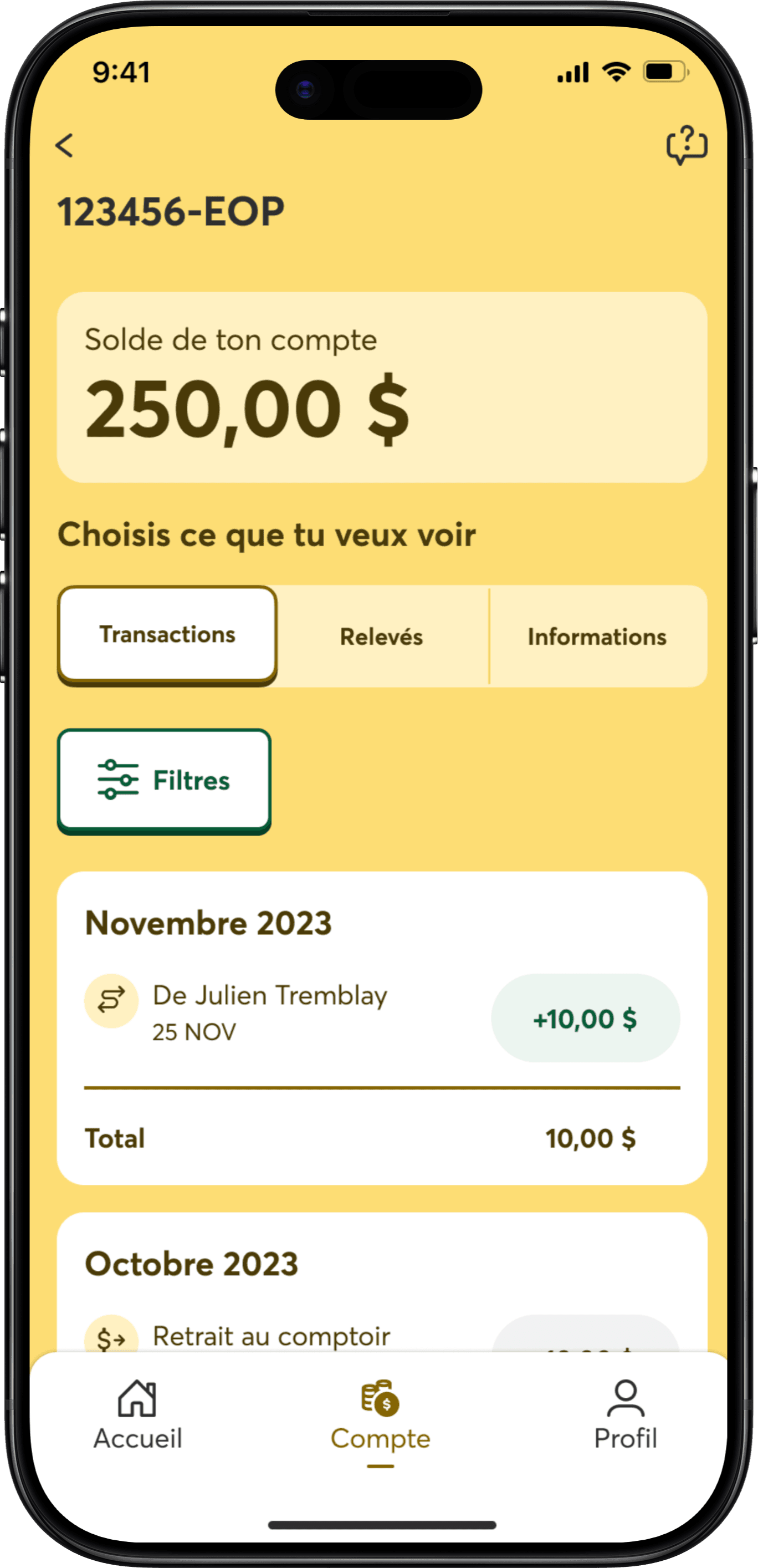
Transactional Section
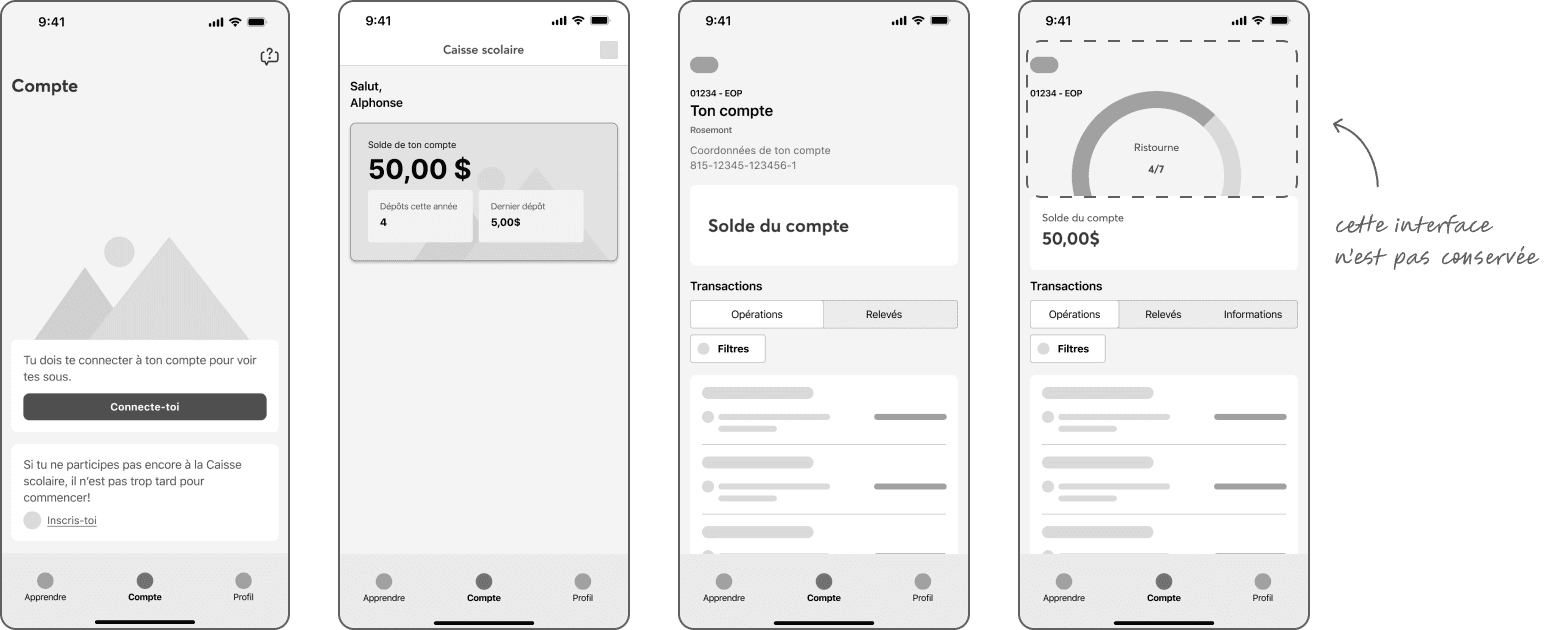
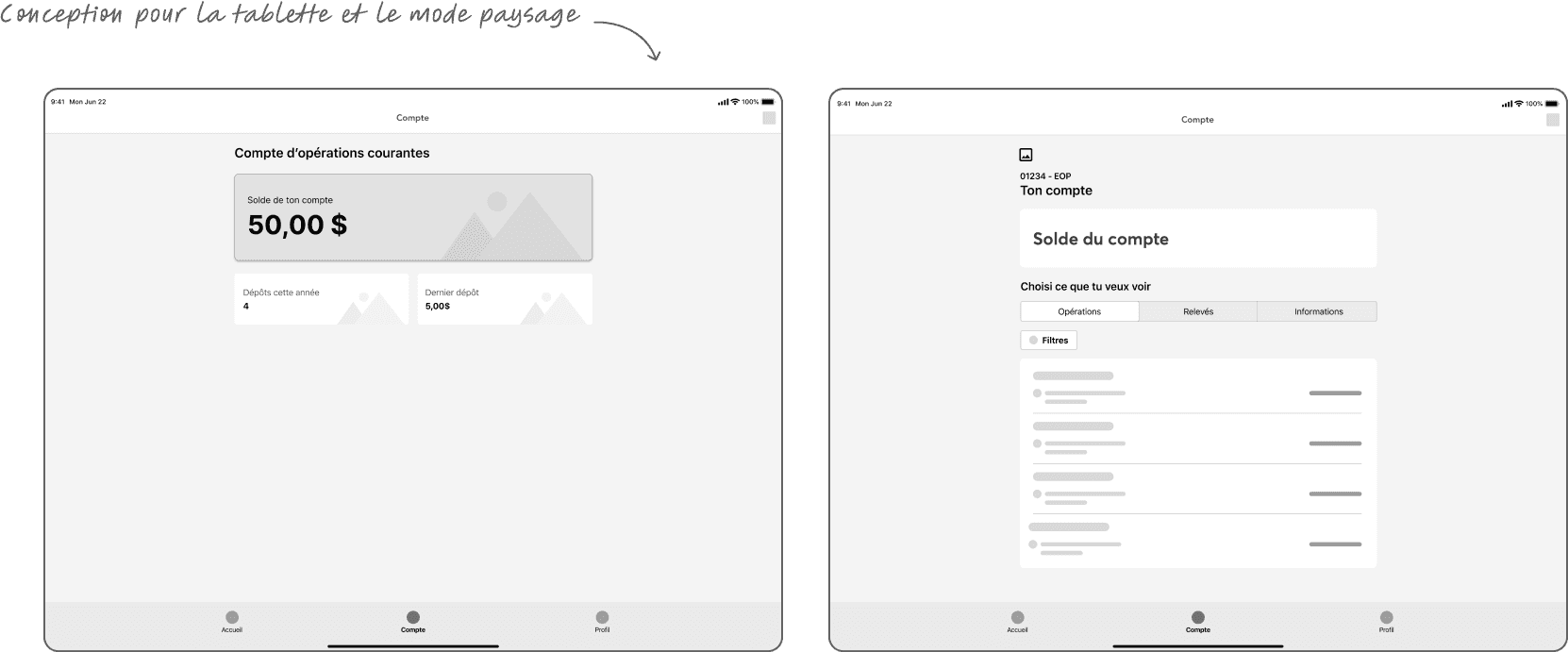
To ensure brand consistency and accelerate development, I leveraged existing design patterns from the Desjardins application, adapting them specifically to the School Caisse context.
The goal of this approach was to maximize interface simplicity without compromising information integrity, and to harmonize the experience for parents. Since some functionalities are primarily used by parents, aligning with a familiar design and patterns greatly facilitates their onboarding and usage.
Profile and Settings
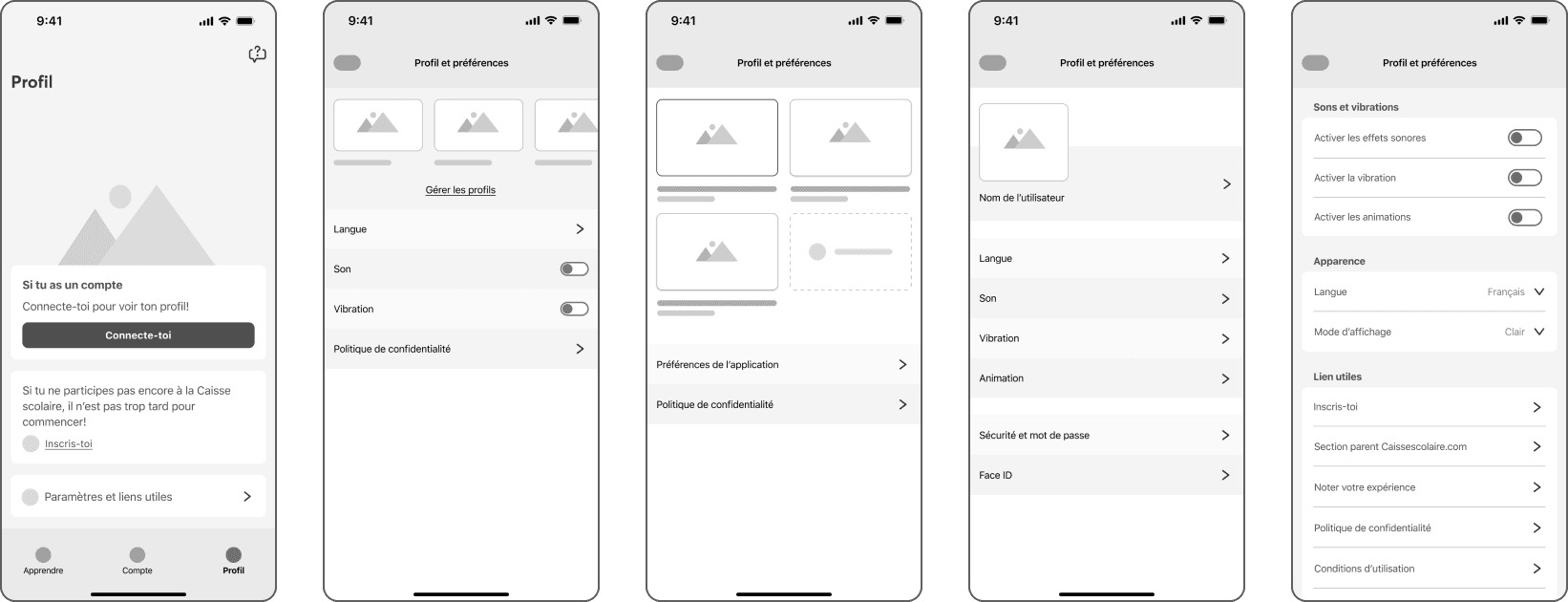
I designed the profile section to group account data and application settings into a single, simplified access point.
This consolidation is strategic for the future: it prepares the application for future iterations focused on personalization. Our analysis shows that personalization is a key lever for capturing and retaining our clientele. It is therefore in this space that, in the next stages, users will be able to customize their experience and choose their avatar, thereby strengthening product ownership.
We conducted a rigorous three-phase user testing process, targeting critical areas of the application: the educational journey, transactions/preferences, and the new "Dreams" feature. These tests were essential to validate the application's strengths and identify necessary areas for improvement to enrich the overall experience.
I led the analysis of these test results and supervised the implementation of these UX/UI optimizations to ensure that developments were directly aligned with user needs and comfort.
Identified Issues:
Lack of feedback and dynamism
Difficulty reading due to text volume
Confusion in the transfer process.
UX/UI Optimizations:
Integration of instantaneous feedback (animations, sounds, haptic feedback)
Text reduction and addition of a reading assistant/tool
Simplification of explanations and automatic pre-selection of the destination account during a transfer.