Not Launched
I led and executed the complete redesign of the User Experience (UX/UI) for Desjardins' online brokerage platforms. My main mandate was to significantly reduce the volume of inbound calls to the client relations center and increase the digital satisfaction of self-directed investors by modernizing the platform.
Timeline
Q1 2025 - Q3 2025
My role
Product Designer
Team
Catherine-Jade Lachance, Fabienne Legault, Marie-Michèle Desrosiers
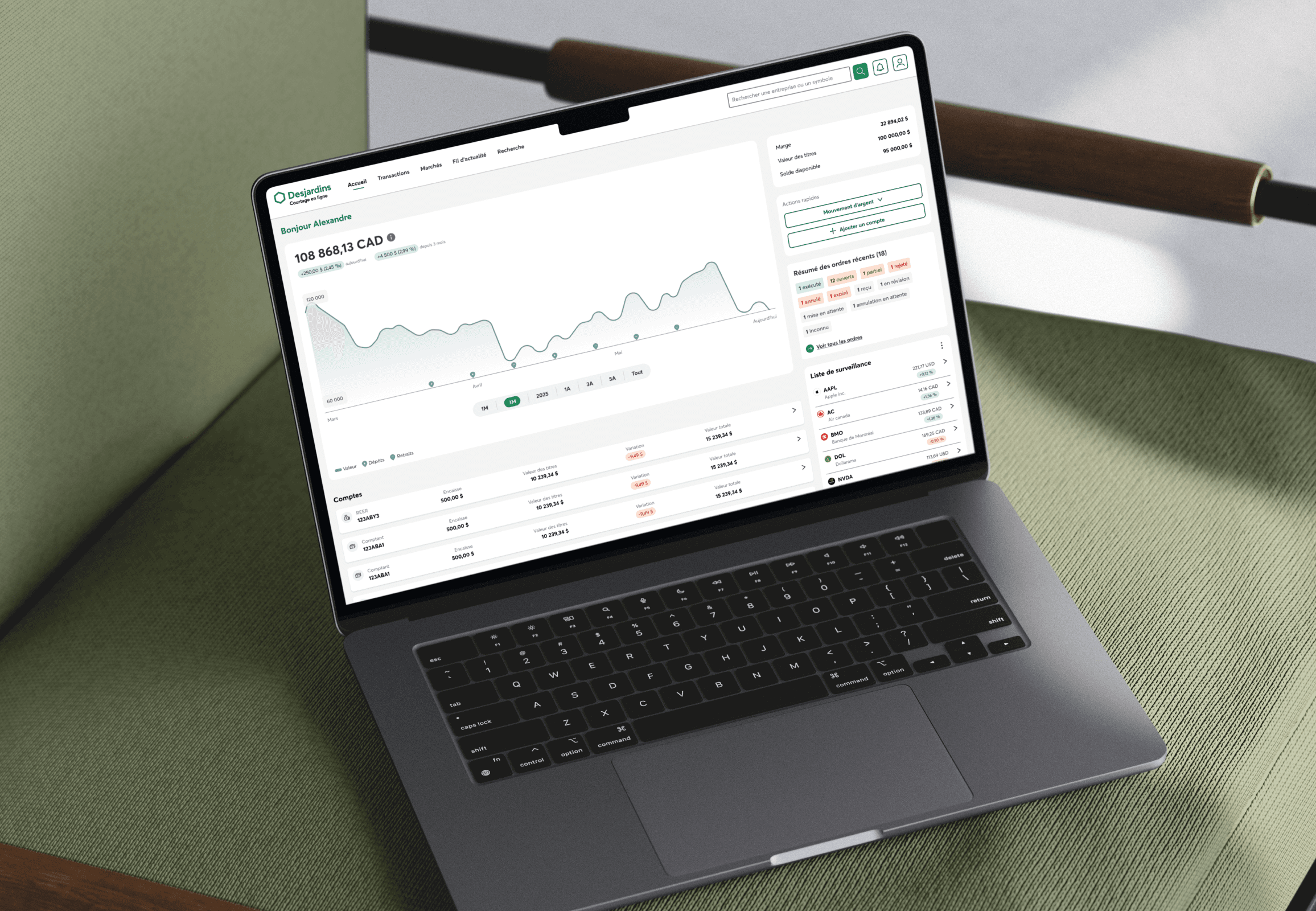
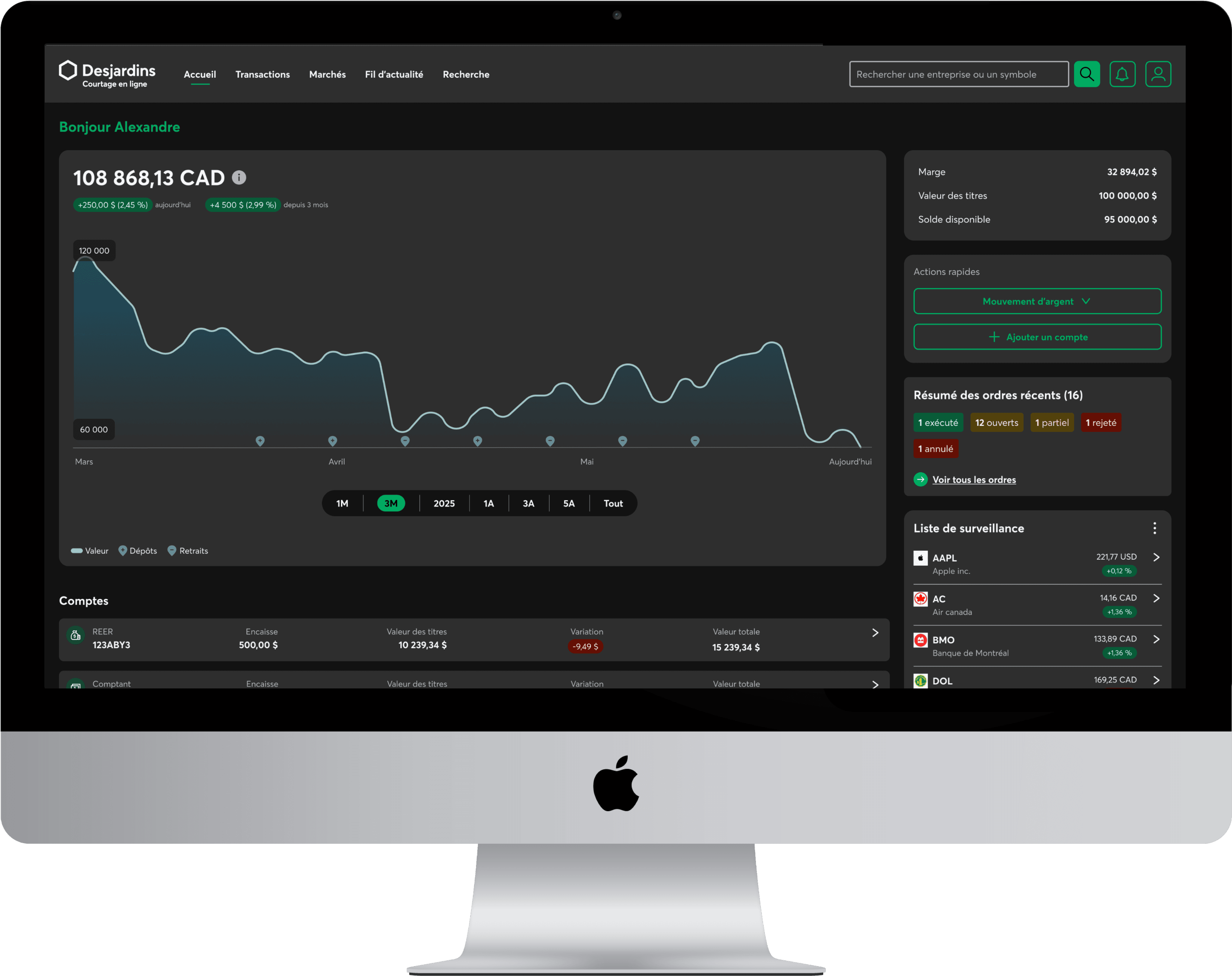
A Modernized Portfolio Overview
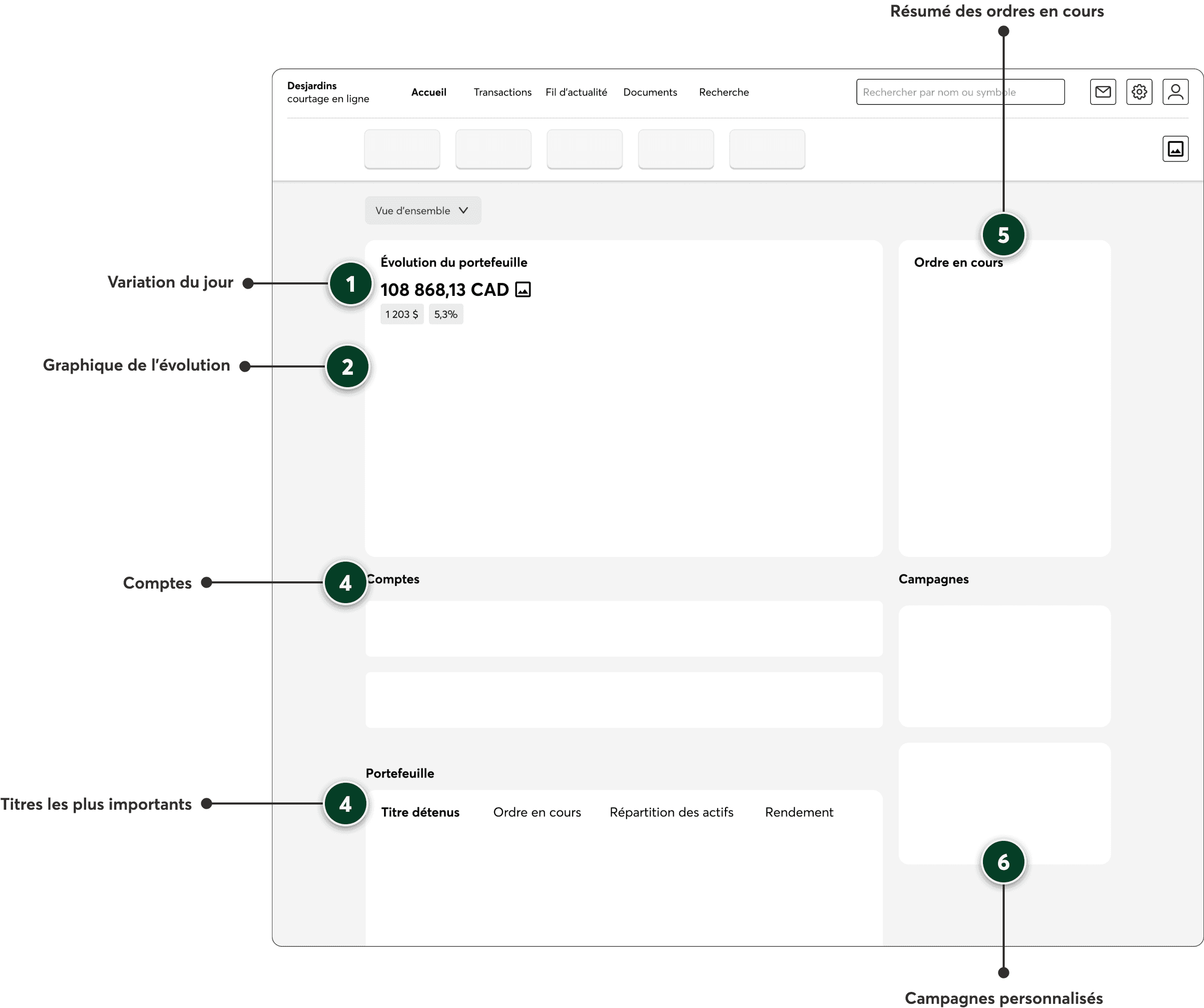
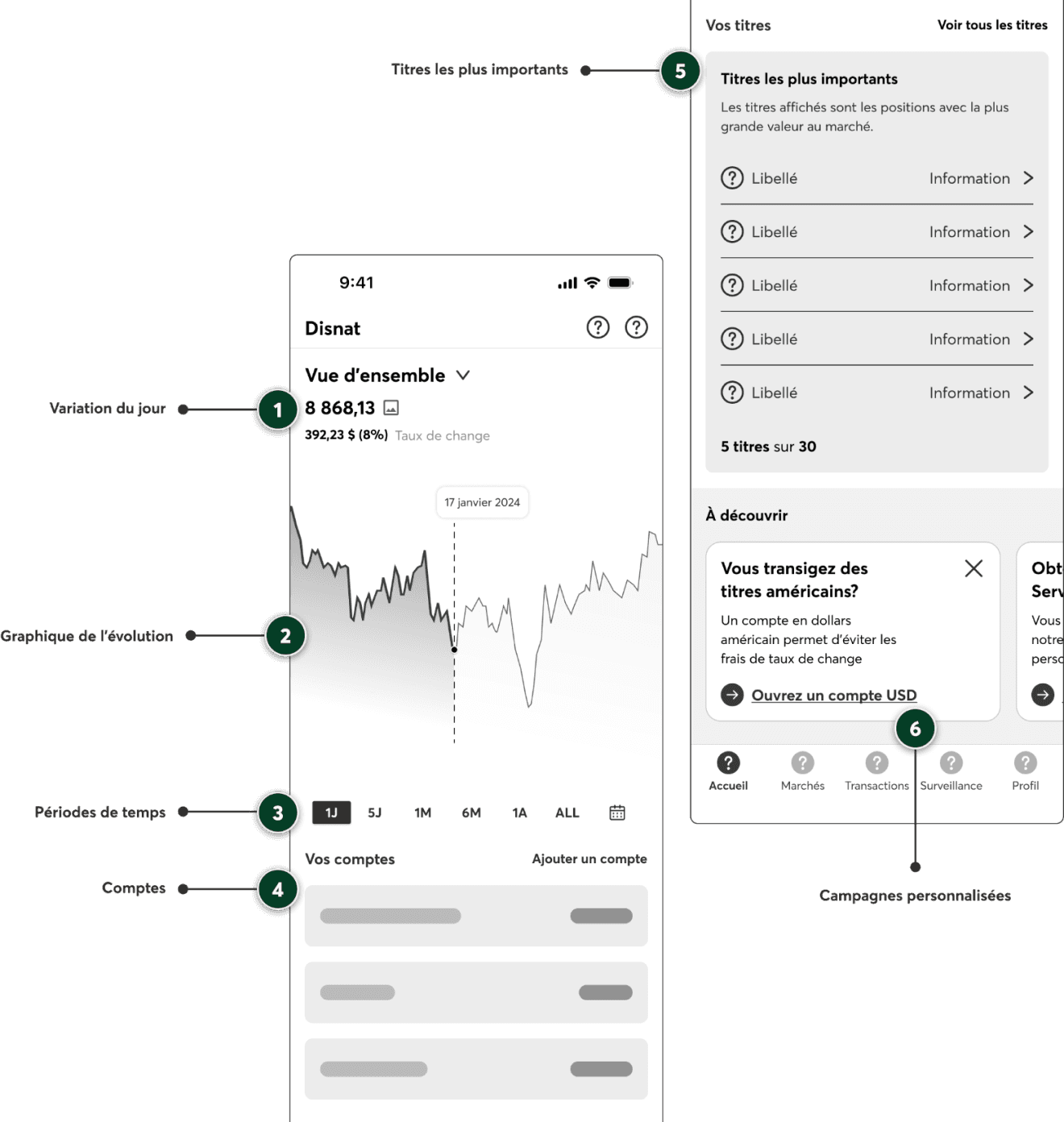
To address obsolescence and improve access to critical information, I conceptualized and delivered a new home screen. This dashboard now offers a comprehensive and summarized view of the user's portfolio performance.
Web Platform
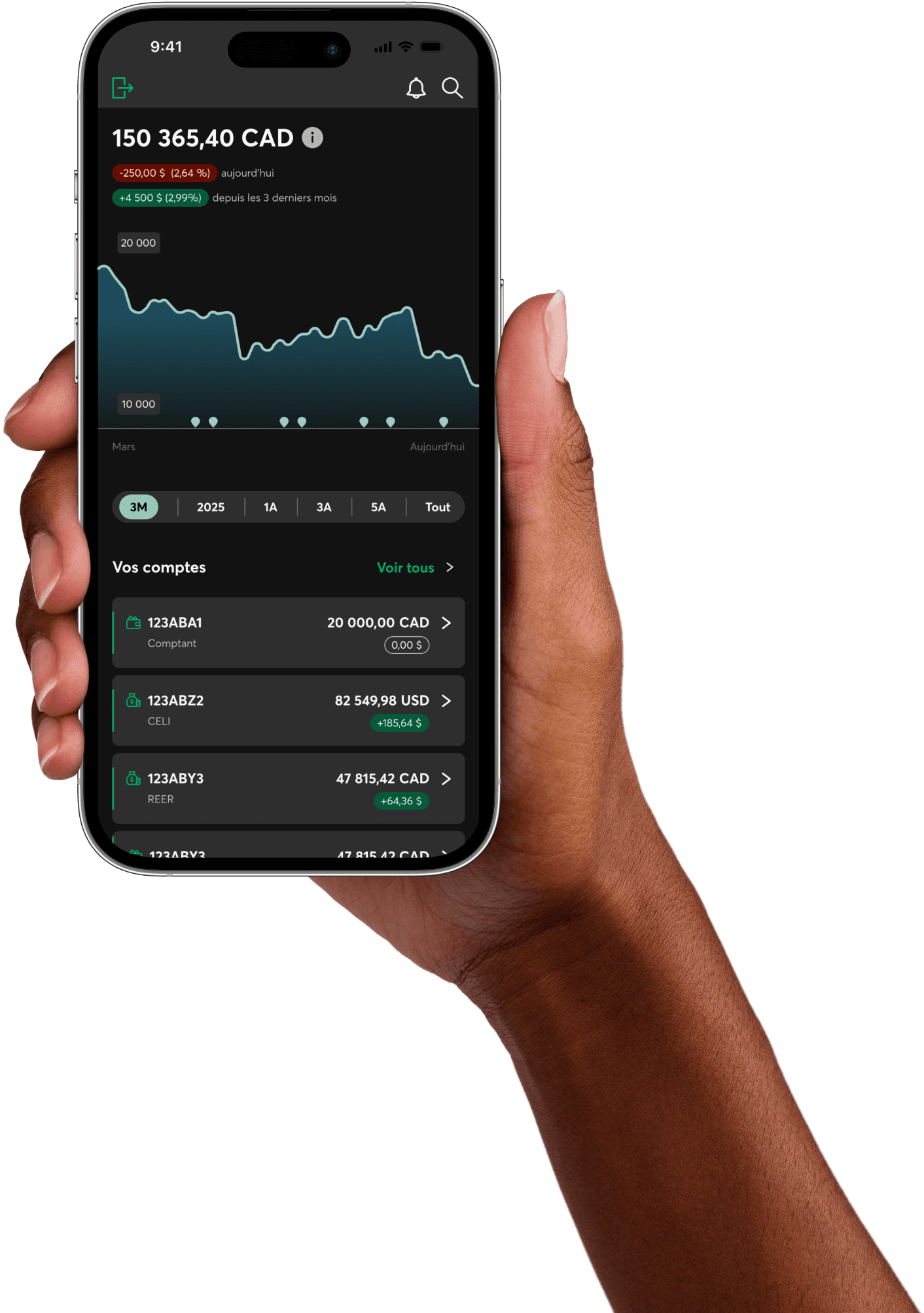
Mobile Application
Widgets
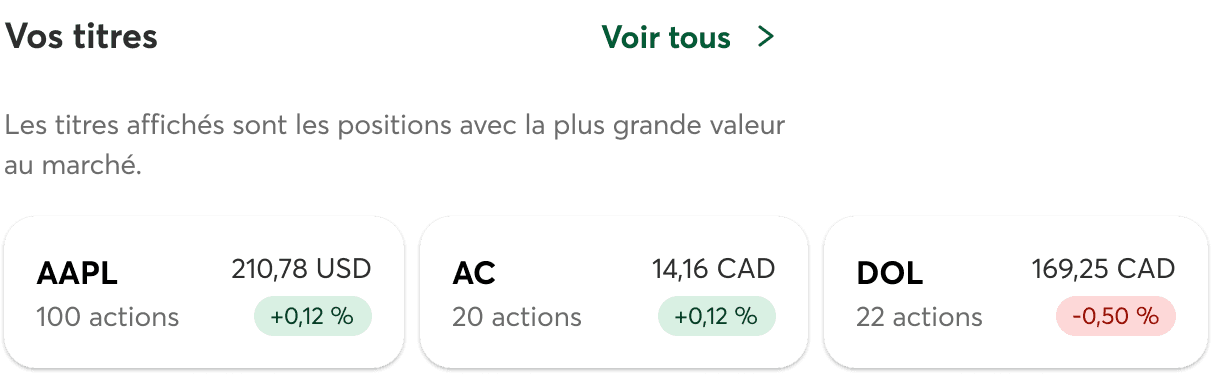
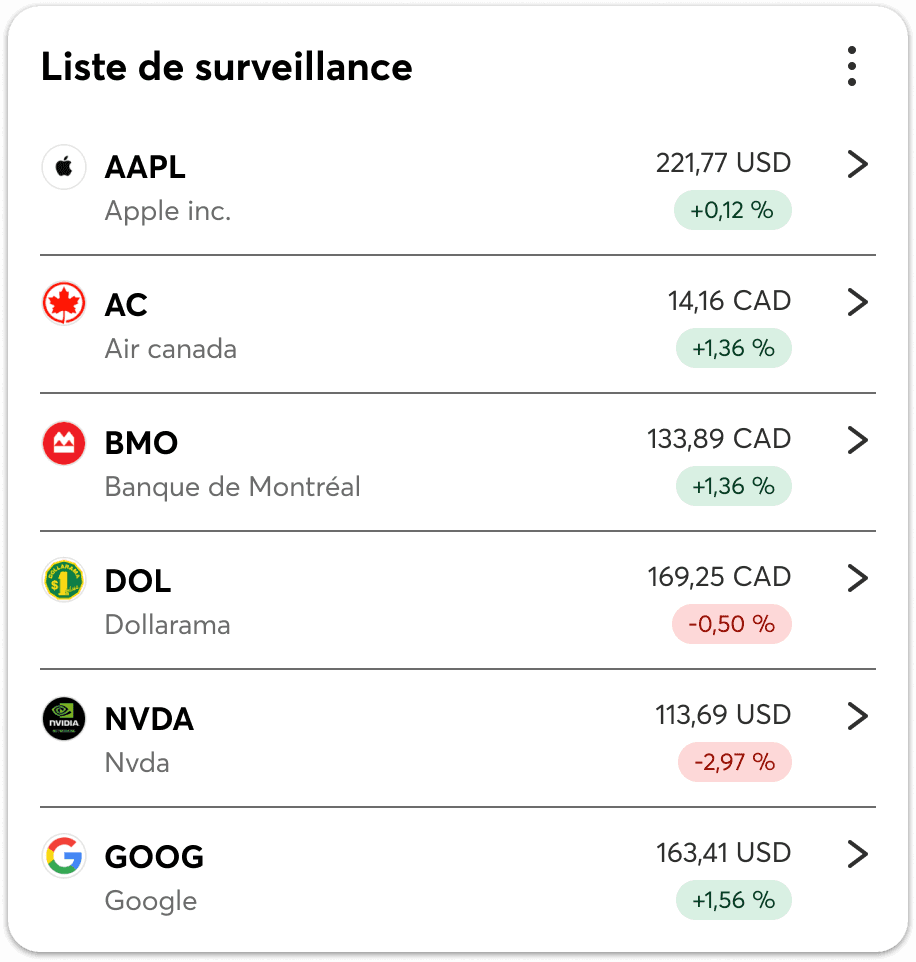
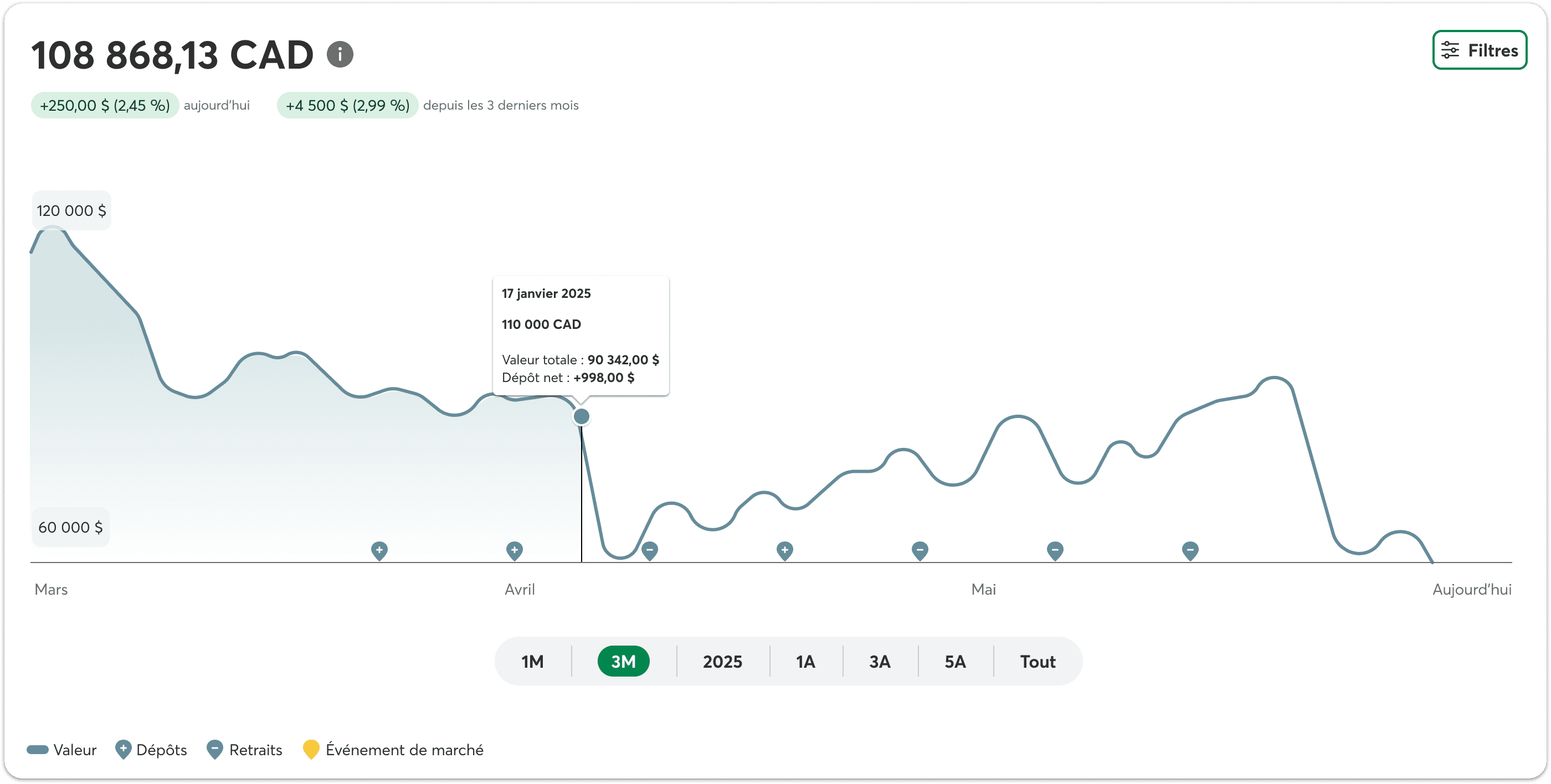
This design integrates widgets covering not only accounts, but also holdings, recent orders, and quick access to the most used functionalities (transactions, transfers, etc.).
Furthermore, I initiated the strategic vision for a modular and customizable home screen for the user, eventually allowing the experience to be adapted based on their investor profile, which will be developed in a second phase.
Holdings
Watchlist
Performance Chart
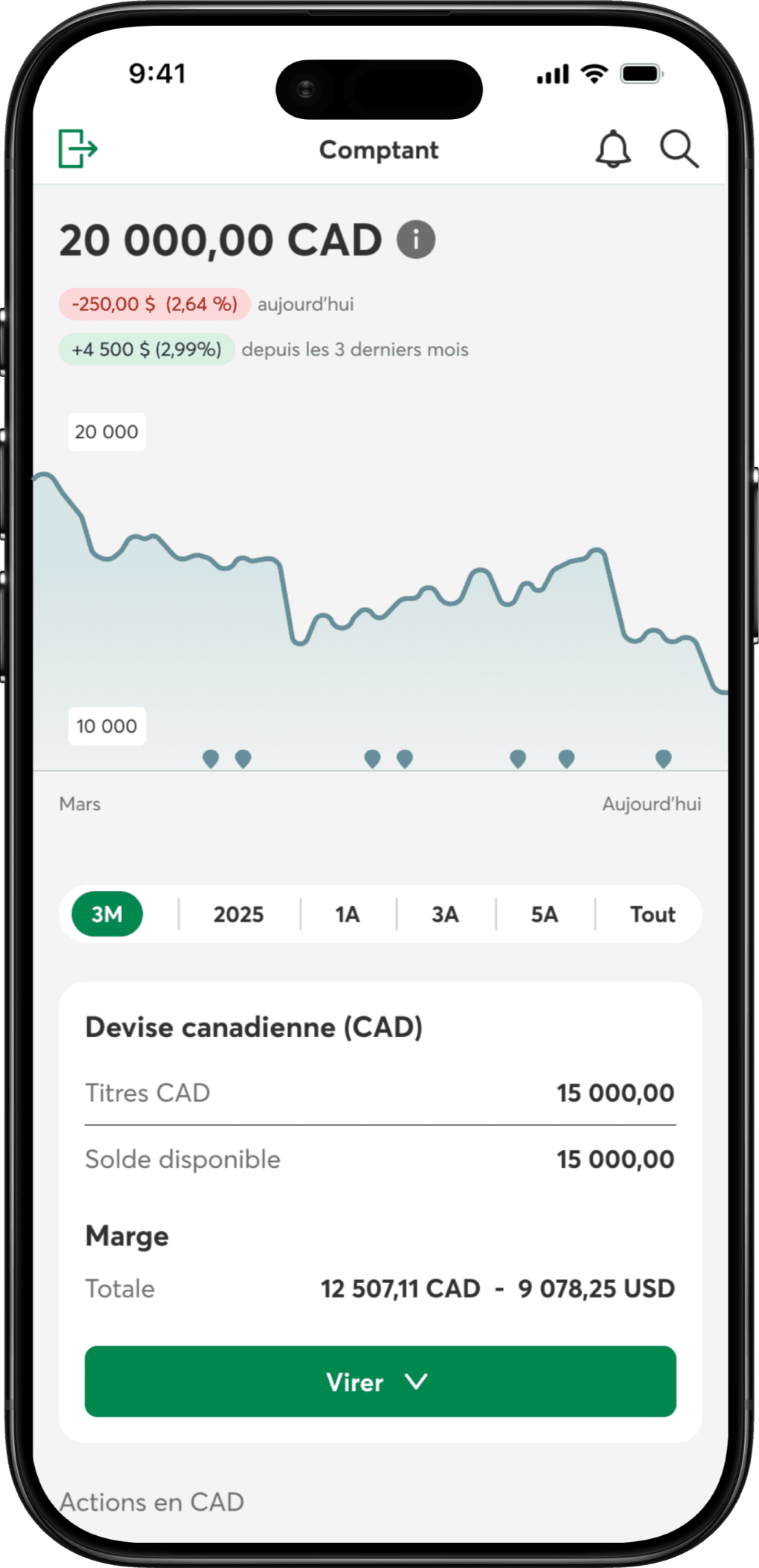
First Optimization of Information Architecture and Account View
Managing Web Complexity: I influenced stakeholders to restructure the information architecture. I moved detailed account content to a dedicated second-level page, thereby reducing cognitive load and improving clarity for the user.
Enhancing the Mobile Experience: I modernized the account interface for better information hierarchy on small screens. I integrated an account value chart for quick portfolio visualization.
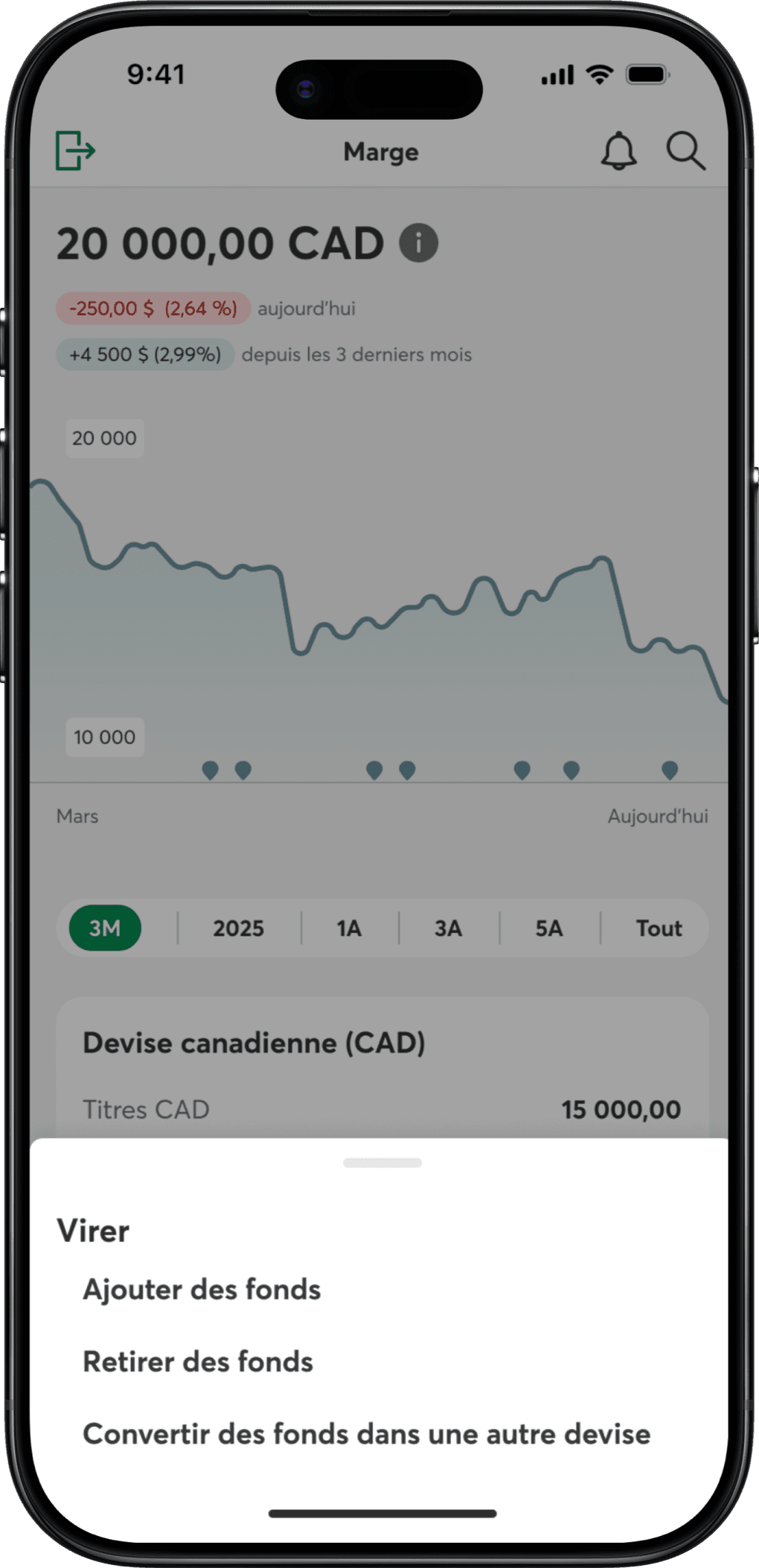
Access to Transfer Actions: I strategically added a direct access button for fund transfers from the detail page, simplifying the transactional journey and access to this critical action.
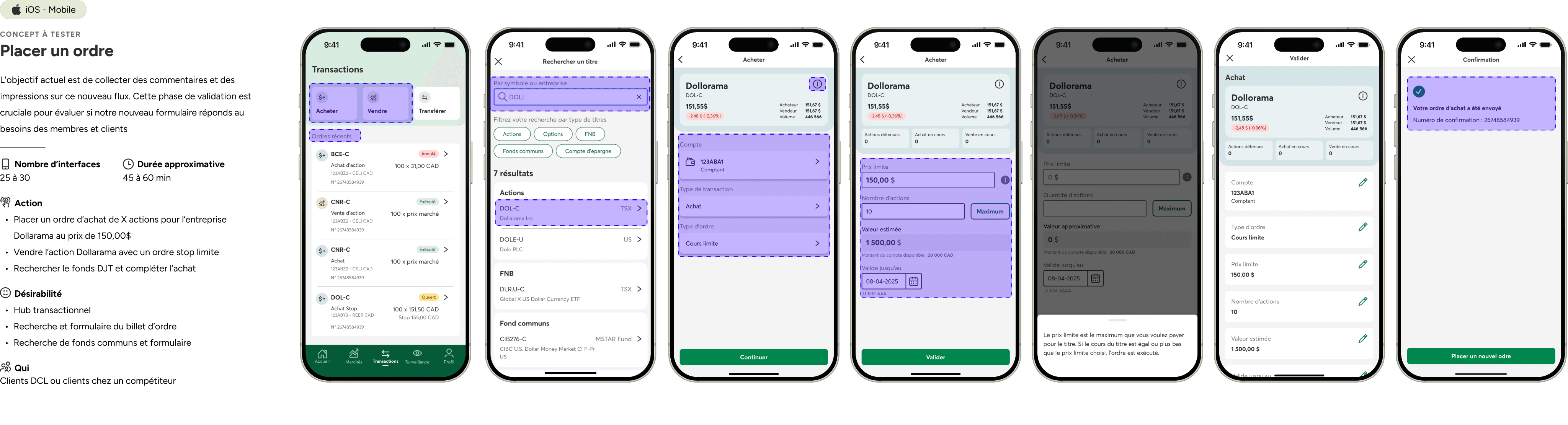
Placing an Order
I led the complete redesign of the order placement process. This work resolved several major friction points:
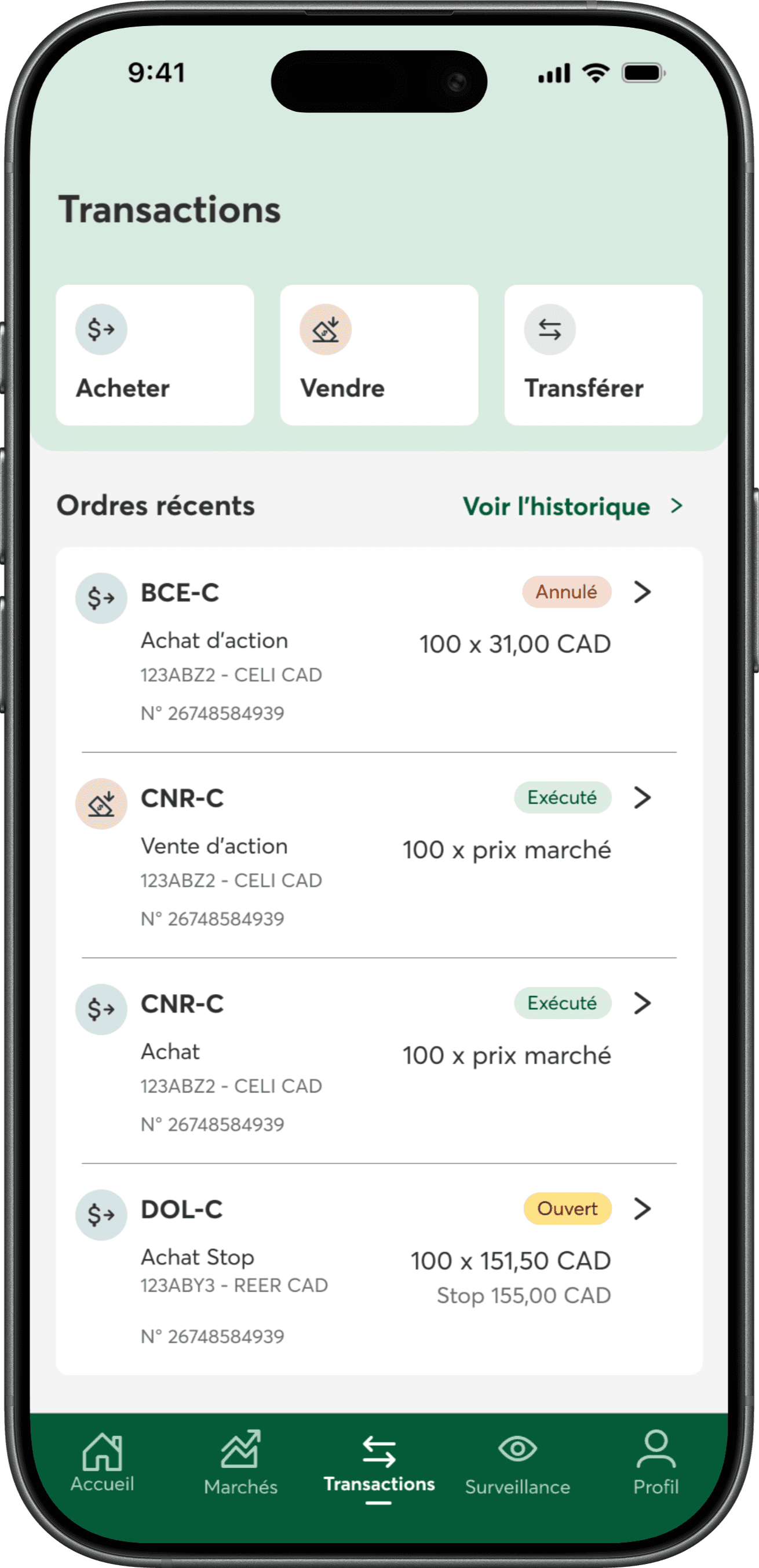
Simplifying Access to Transactions: I designed a clear transactional "hub," grouping all possible actions (buy, sell, fund transfer), thus solving the discoverability issue for transfers.
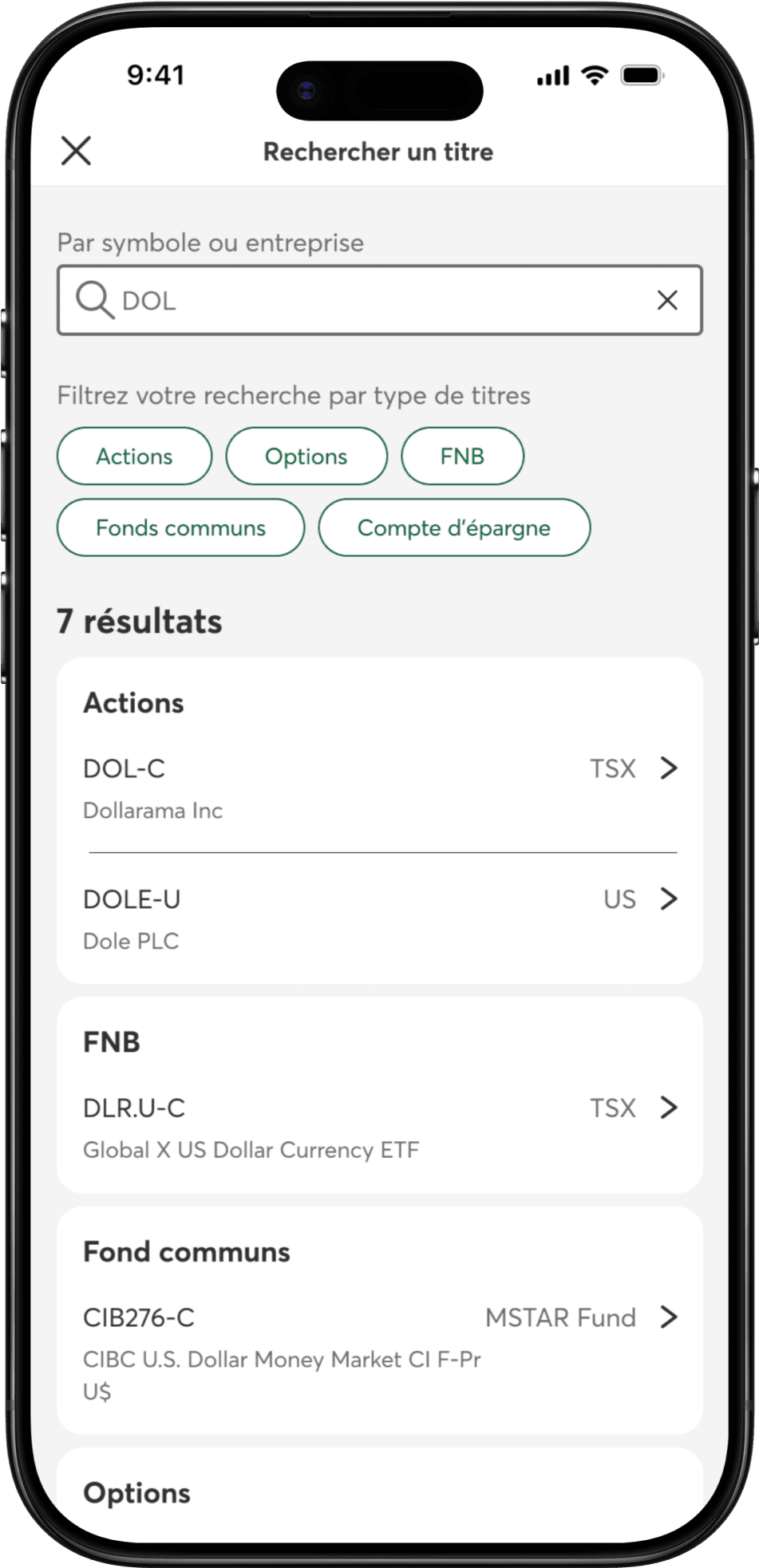
Improving User Intent: I positioned the symbol (ticker) search as the first step in the order process. This approach, aligned with industry best practices, ensures that the client's intent is established before filling out the form, a significant improvement over the old experience.
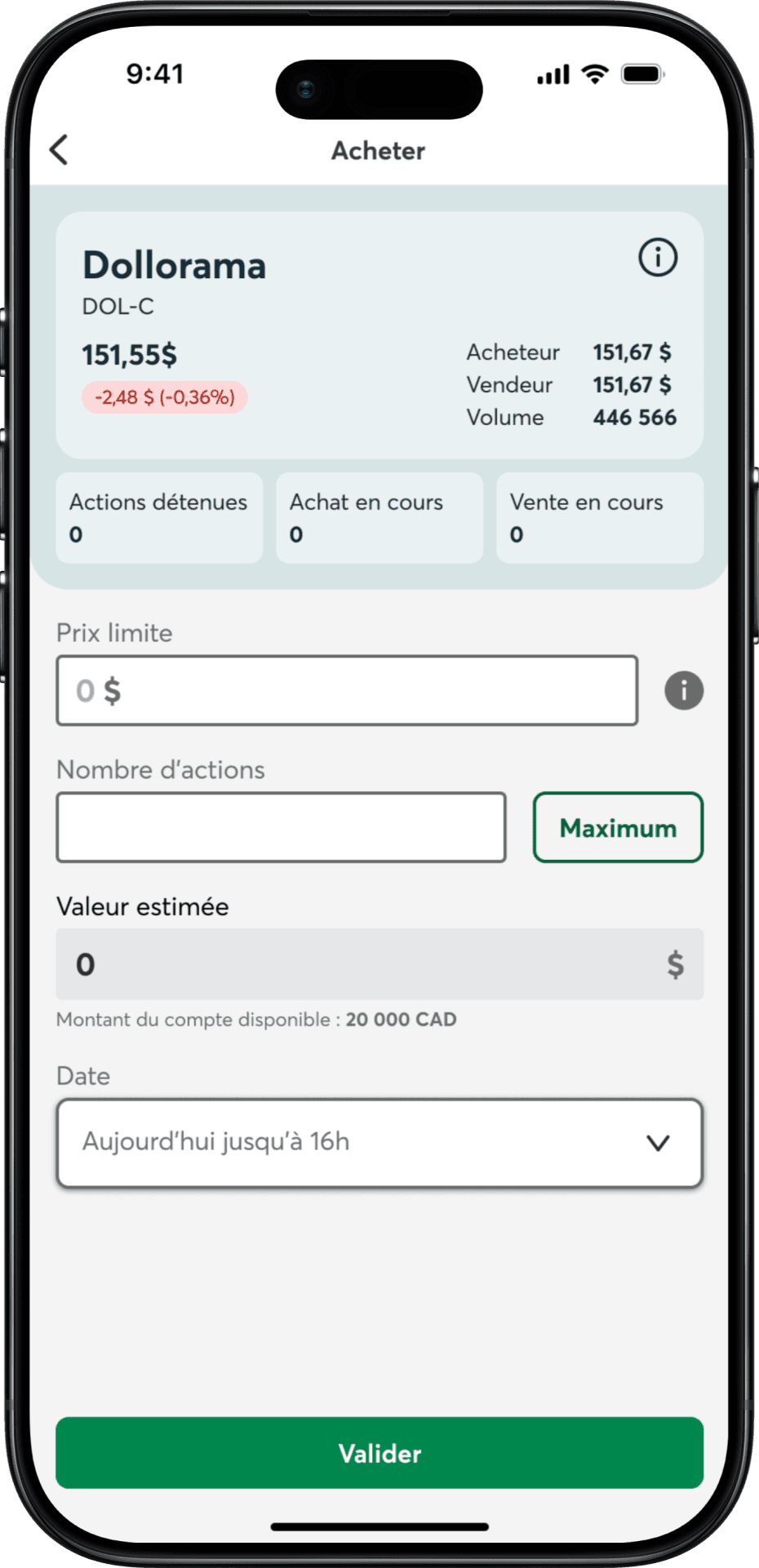
Clarity and Confidence: I restructured the order panel to simplify the form and integrated contextual micro-information and tooltips for complex or less familiar fields, increasing confidence and reducing transaction errors.
Process
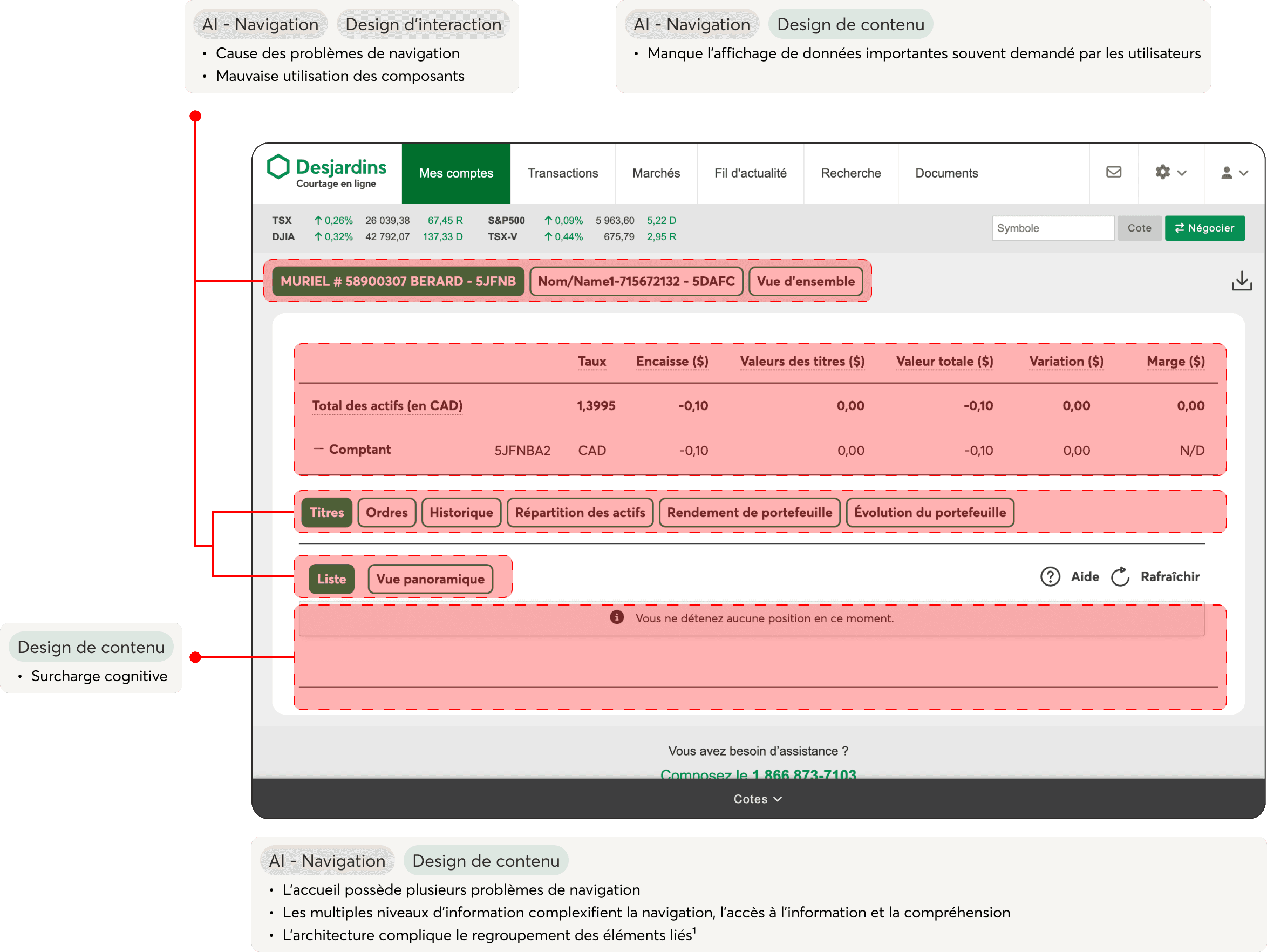
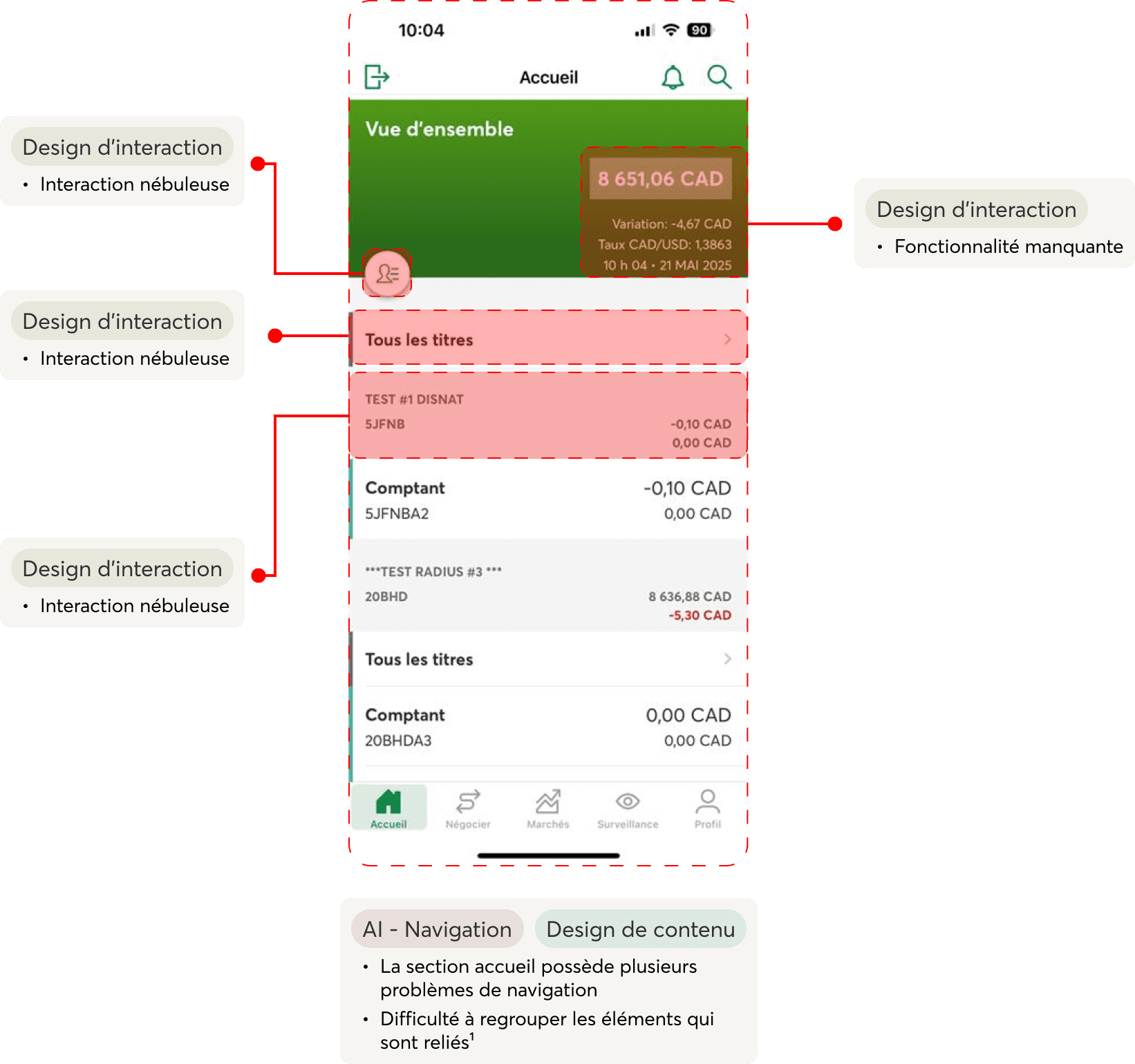
The current platform is causing numerous frustrations for our clients, leading to a significant increase in operating costs and a decrease in client satisfaction. The problems are widespread, starting with the homepage, which presents several comprehension and navigation issues. Our teams receive calls regarding all functionalities, primarily because simple actions like fund transfers or adding an account are difficult to find. Furthermore, frequent errors during order placement, due to an overly complex form, contribute to the congestion of the service centers.
Persona Profiles
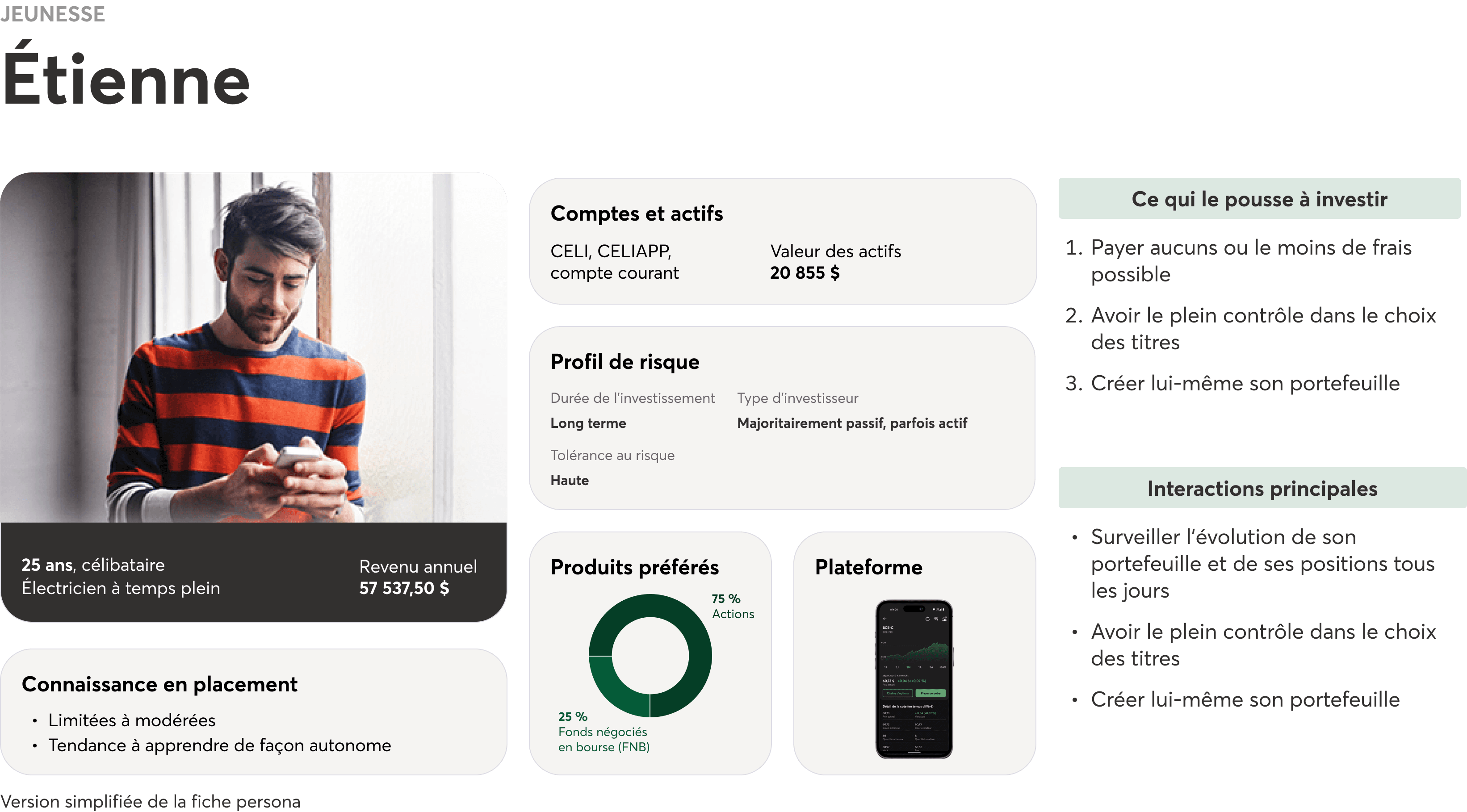
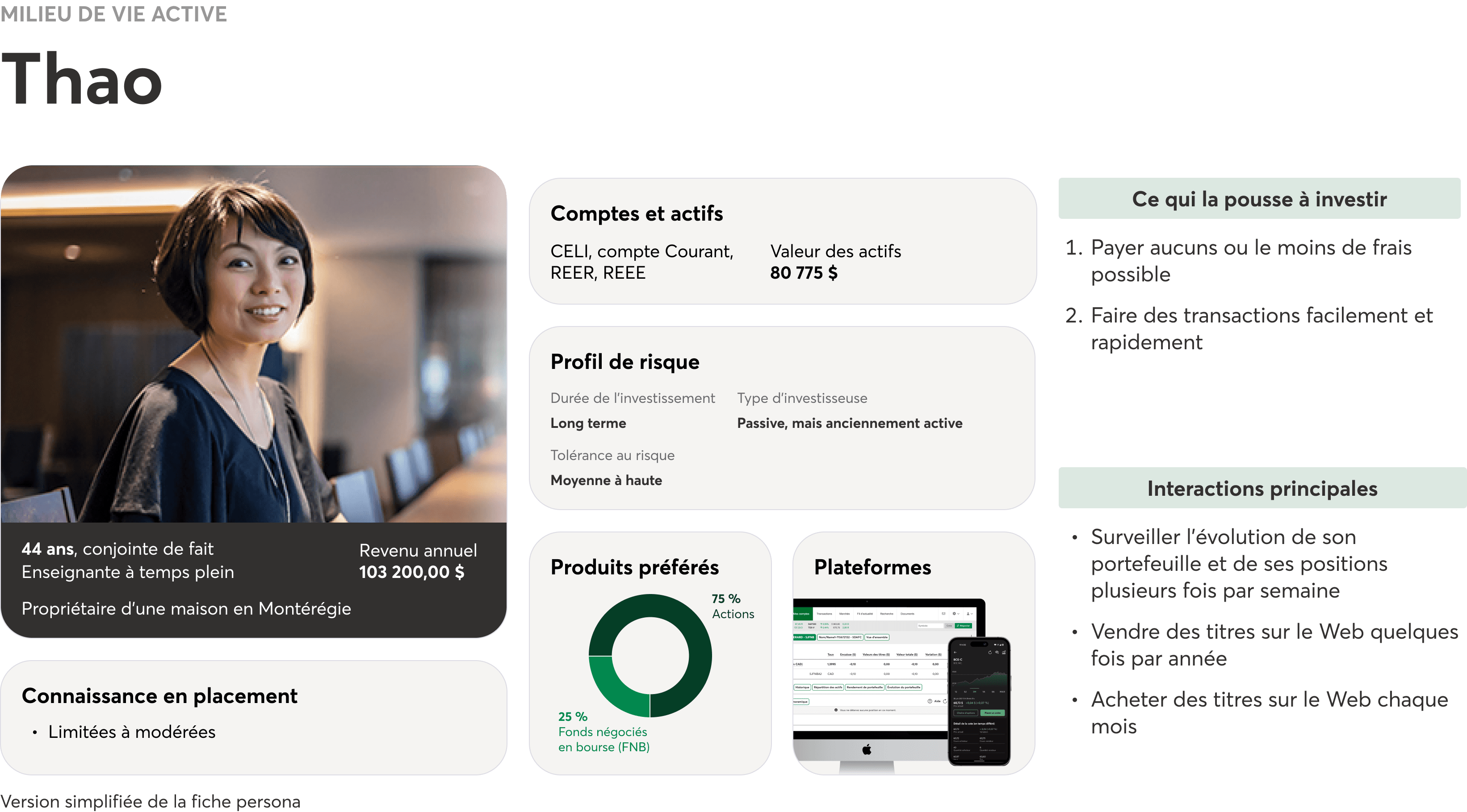
To frame the scope of the redesign and ensure effective design, we based all our thinking on two personas established by Desjardins, representing 60% of our target clientele.
Our work emphasizes the platform's demographic shift: we specifically integrate the needs of youth profiles and novice investors. The objective is to meet their expectations for simplicity of experience and thus capitalize on the observed increase in their interest in self-directed investing.
Design Thinking Workshop
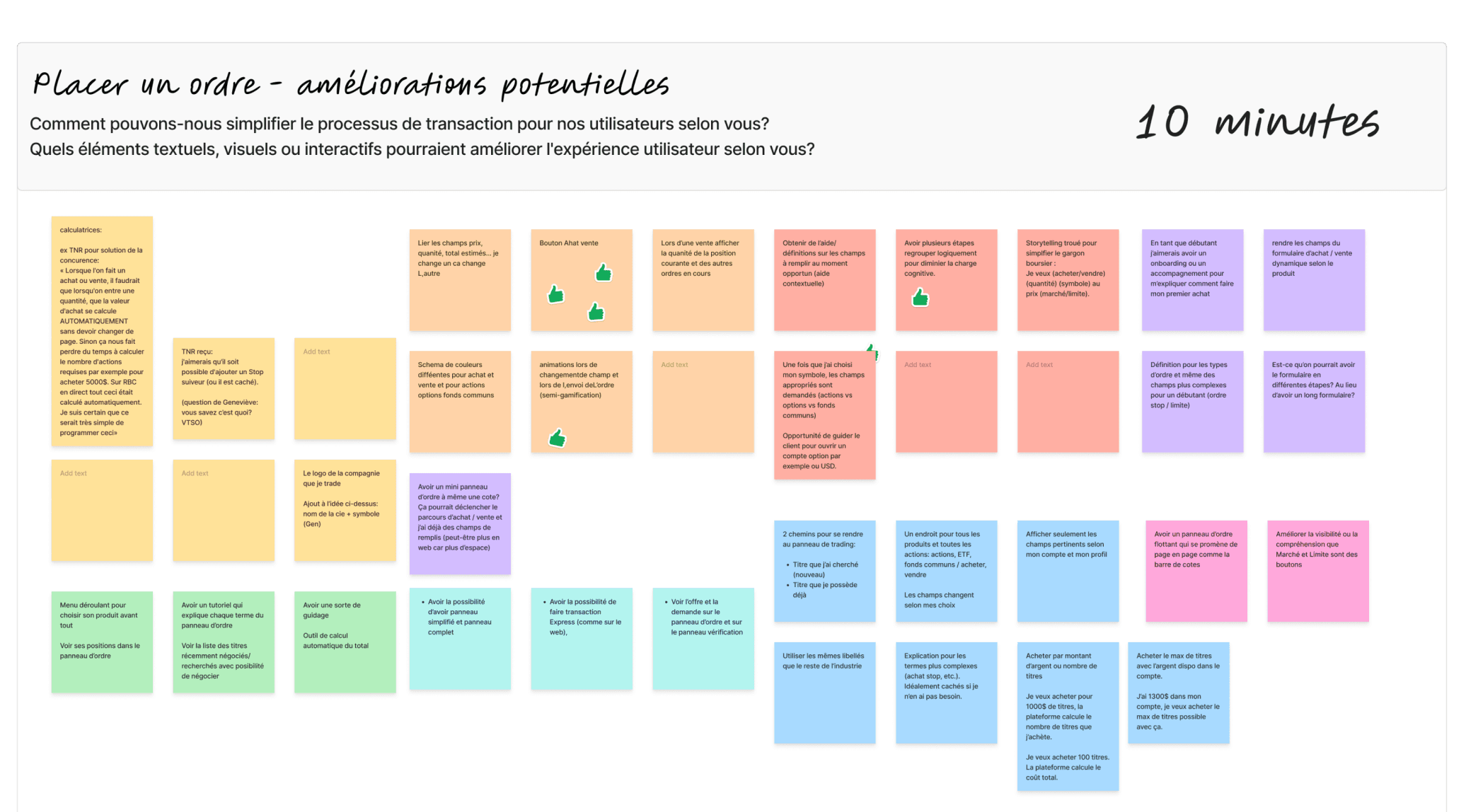
I led a strategic co-creation workshop with key stakeholders from various sectors (Client Services, Business, and IT).
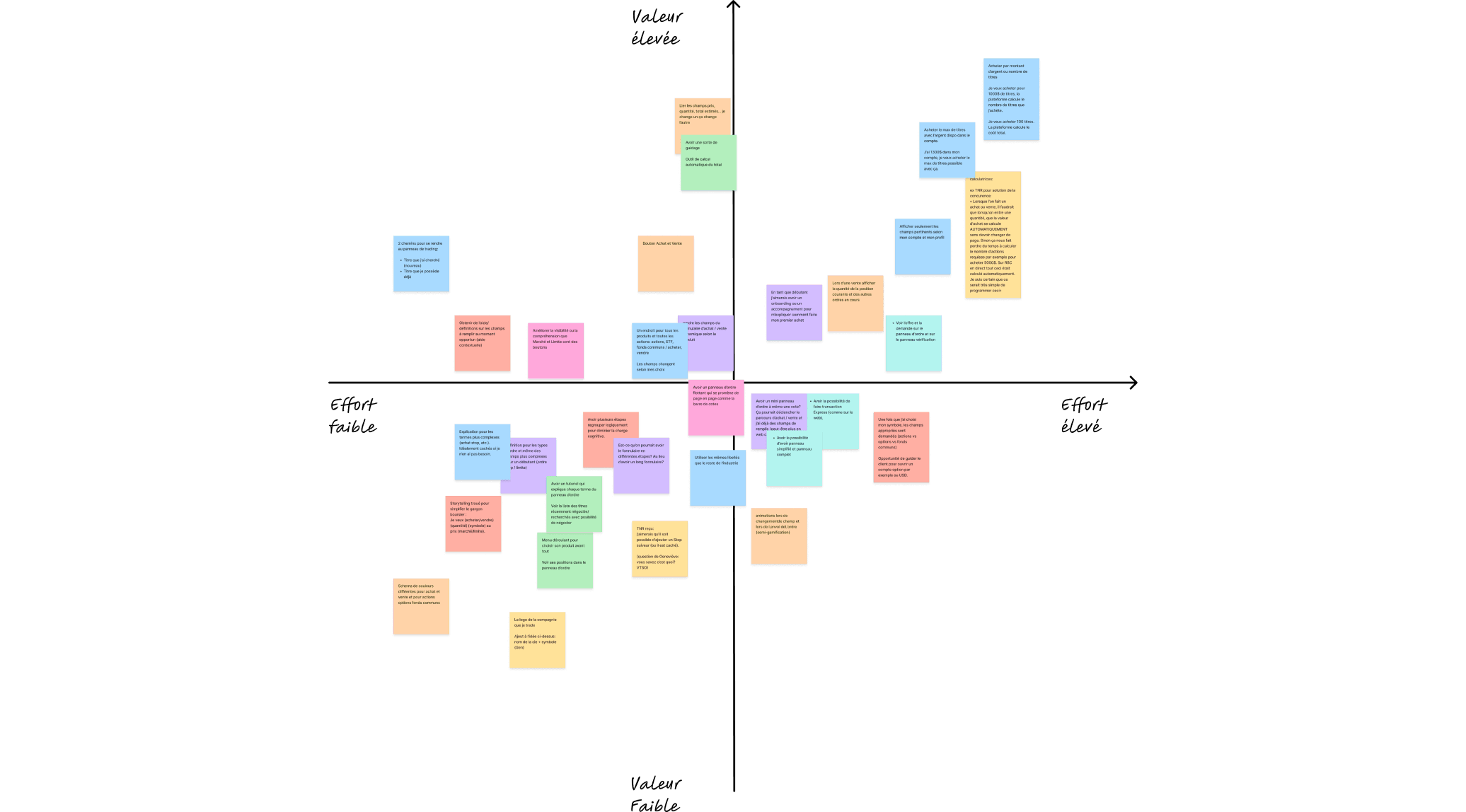
This workshop allowed me to unify the understanding of the problems and gather diverse input to enrich the solution's improvement. Following this idea generation, I collaborated closely with the Product Owner and the Technical Lead to evaluate the effort and value of each proposition.
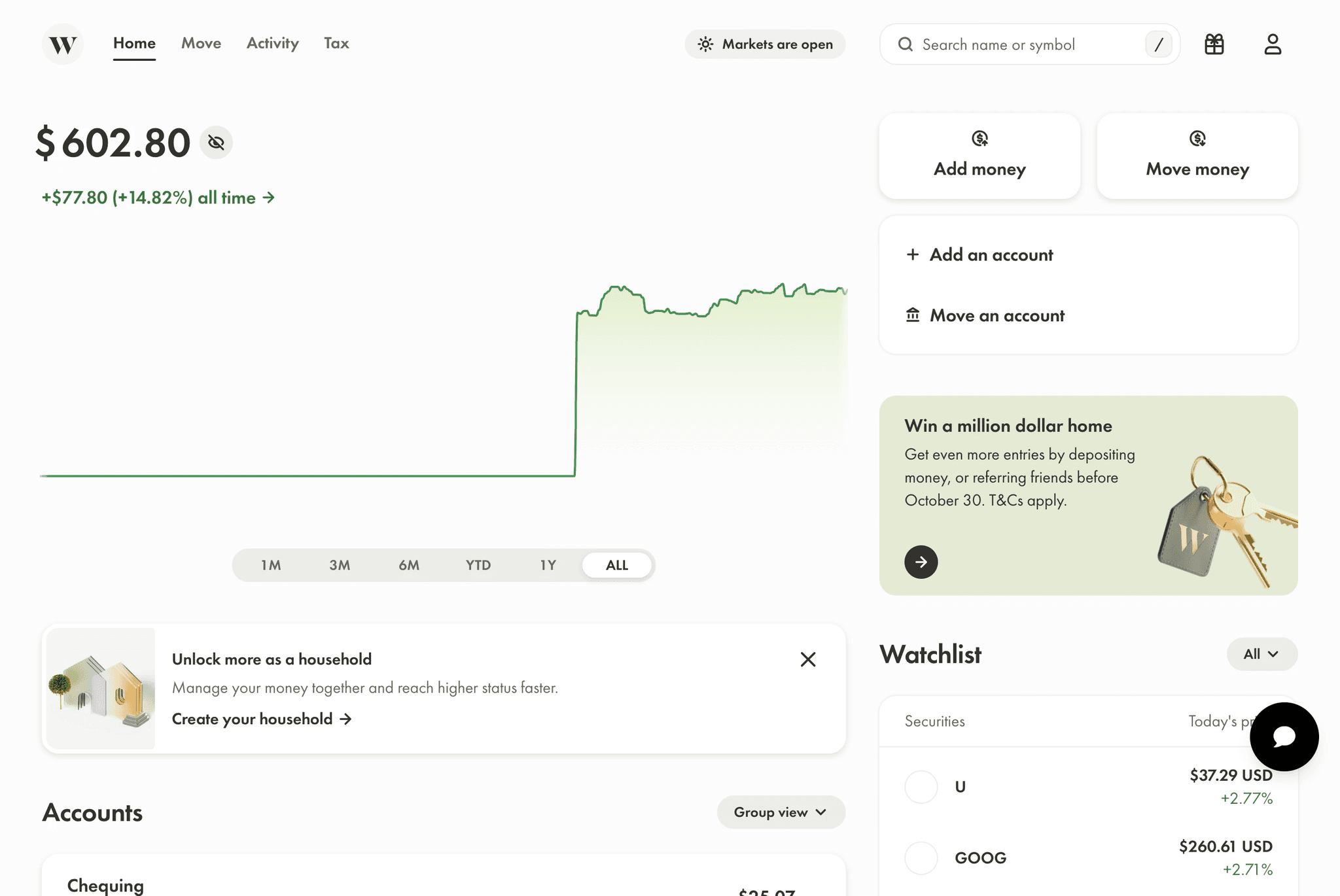
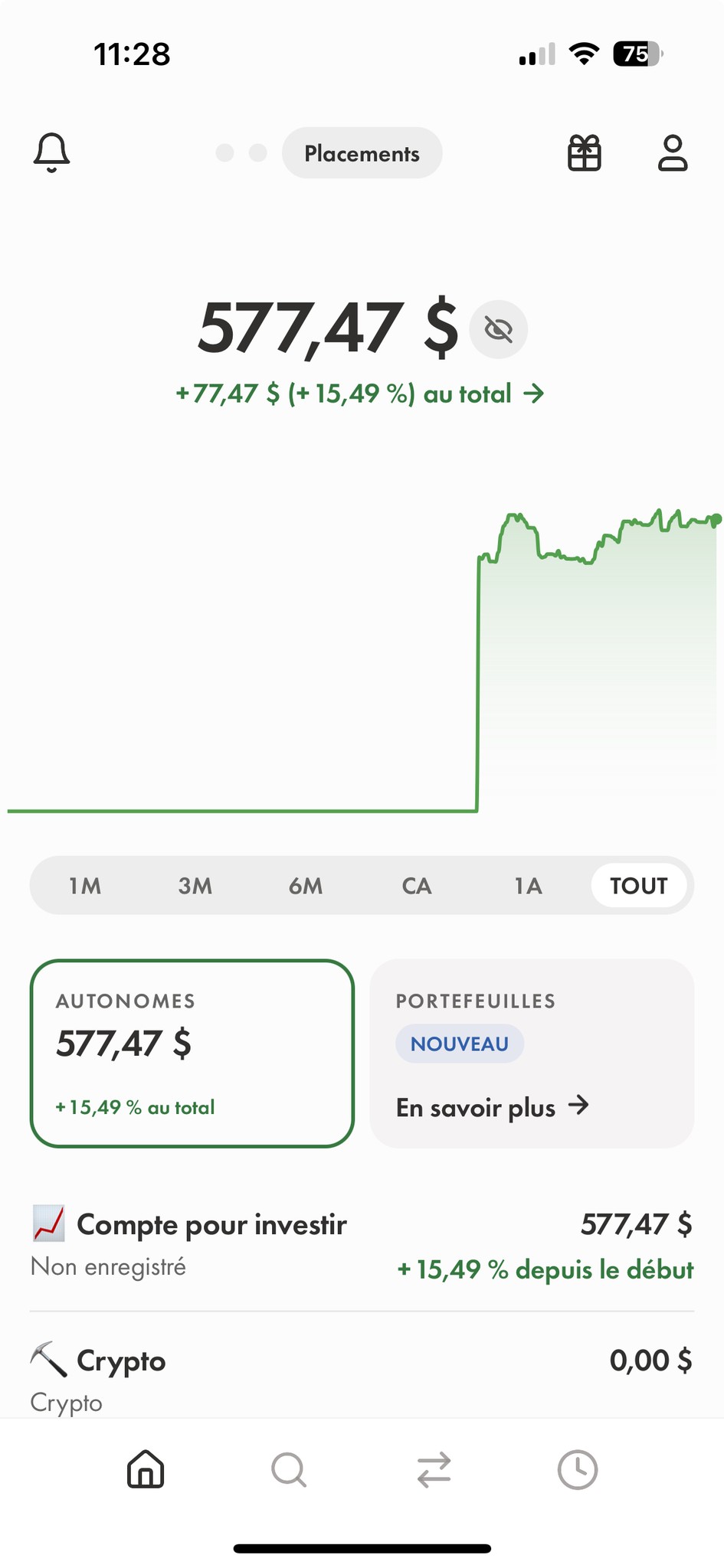
In the inspiration and research phase, I analyzed key competitors such as Wealthsimple, Questrade, and Robinhood. These platforms served as a benchmark for their simplicity of use and modern digital experience.
Design
Homepage
Faced with a tight development budget, I focused my efforts on highlighting existing functionalities that were previously low-visibility or 'hidden,' rather than pursuing a complete overhaul of the information architecture.
Furthermore, in close collaboration with the Product Owner, I established a phased implementation strategy. This approach allows for the gradual integration of new modules, delivered periodically and prioritized based on user preferences and their impact on the user experience.
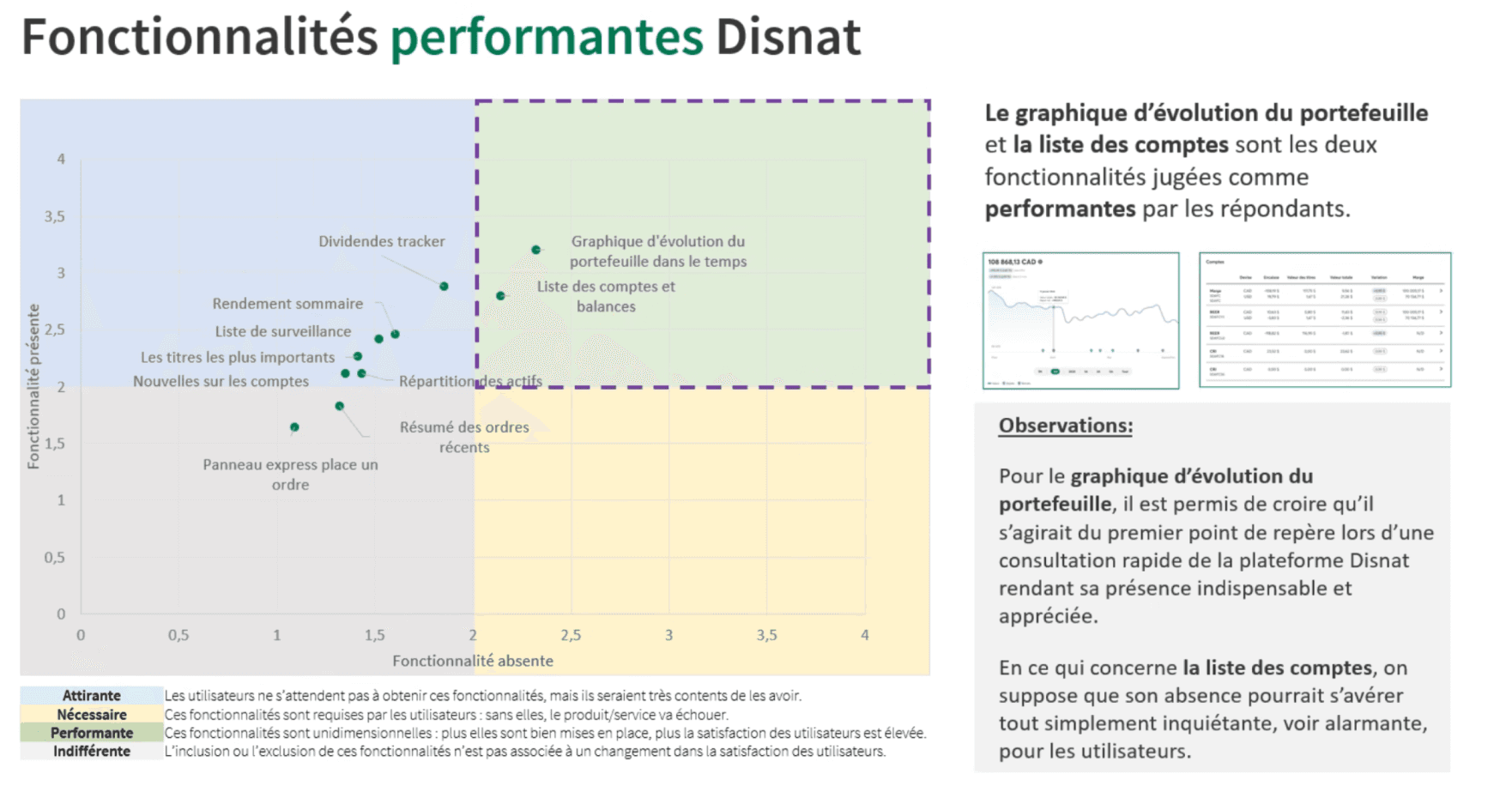
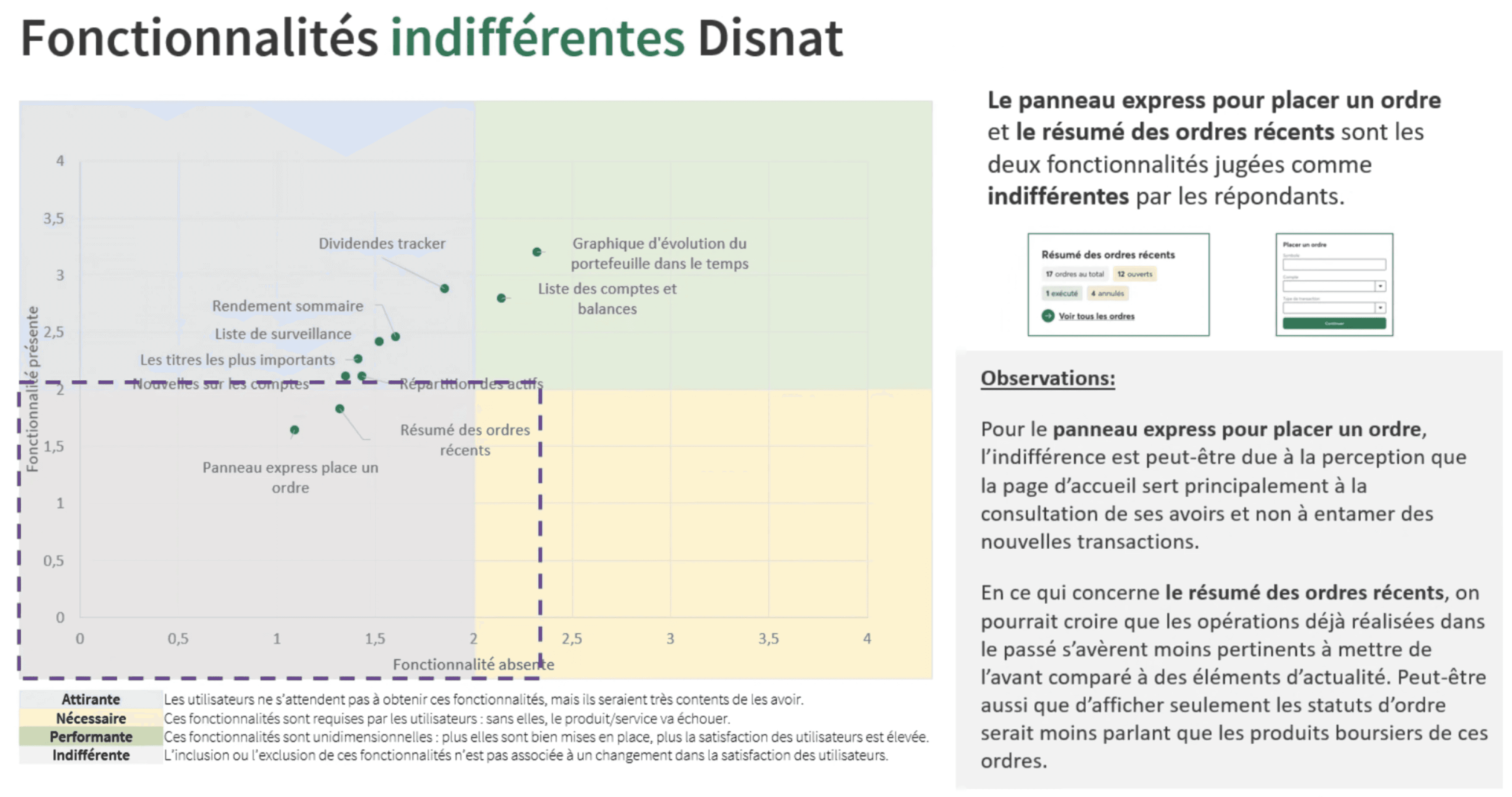
To base our choices on user needs, we conducted a desirability survey to evaluate the perceived value of the widgets planned for the new home screen. This approach allowed us to ensure that our design was aligned with client expectations.
The results guided our prioritization:
High-Value Widgets: The portfolio performance chart, summary return, watchlist, top holdings, asset allocation, and account news integration were judged as either high-performing or attractive features.
Indifferent Widgets: The order summary and the express order panel were judged as indifferent by participants, signaling the need to re-evaluate their design or relevance in the initial launch phase.
Placing an Order
I led the complete redesign of the order placement journey, transforming a complex process into a more intuitive and guided flow, aligned with industry standards.
Simplifying the Order Flow
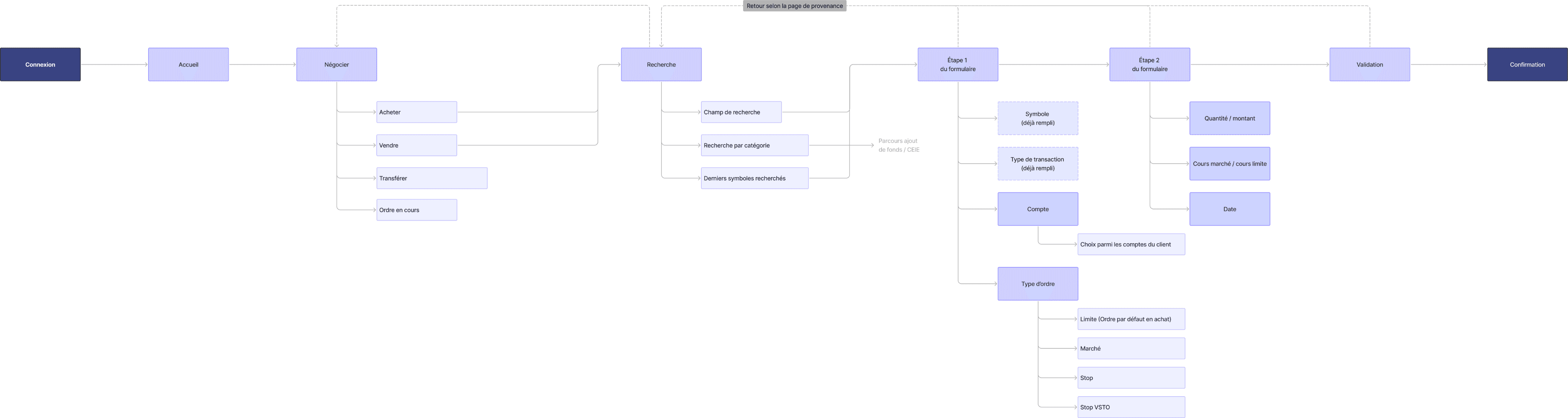
The process now begins with the symbol search, ensuring that the trading intent is established before proceeding to the form. I structured the form into a guided, three-step journey to reduce cognitive load and errors:
Selection of the transaction type (Buy/Sell) and order type (Market, Limit, etc.).
Adaptive and contextualized field input based on the chosen order type, with increased support (micro-copy, input assistance).
Final confirmation of the order submission.
Creation of the Transactional Hub To improve action discoverability, I designed and proposed a centralized Transactional Hub. This Hub groups all possible transaction types and integrates real-time tracking of recent orders.
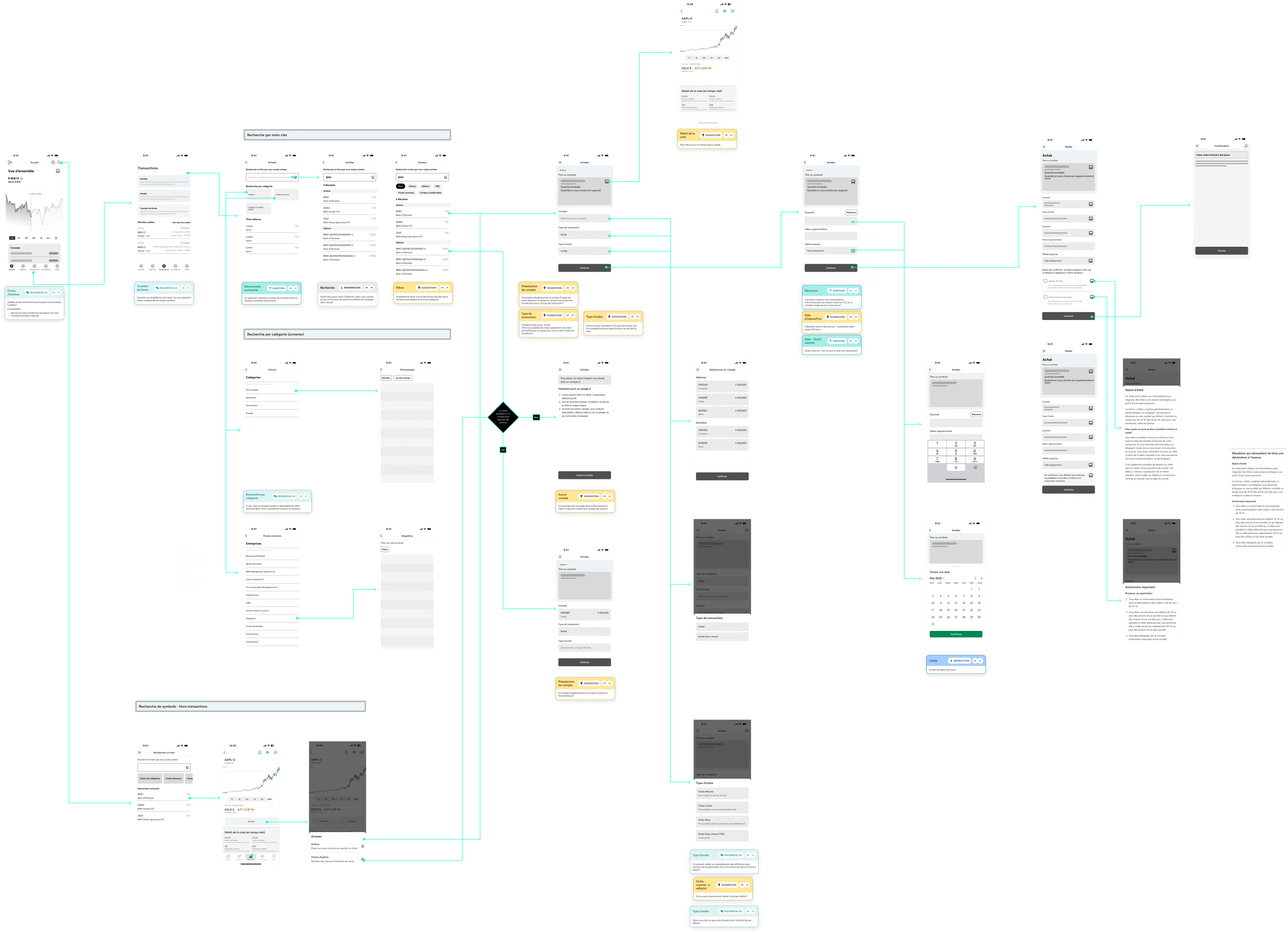
User tests confirmed the ease of use of the new order flow, thus validating the simplification of the journey. However, these tests helped identify friction points regarding clarity, specifically:
The comprehension of different order types (Market, Limit, Stop, etc.).
The explanation of certain fields in more complex orders.
To address this, I collaborated closely with our UX Writer to improve content clarity. We reworked the order descriptions and added explanatory tooltips for the least understood or most complex fields, ensuring better user autonomy and reducing the risk of transaction errors.